
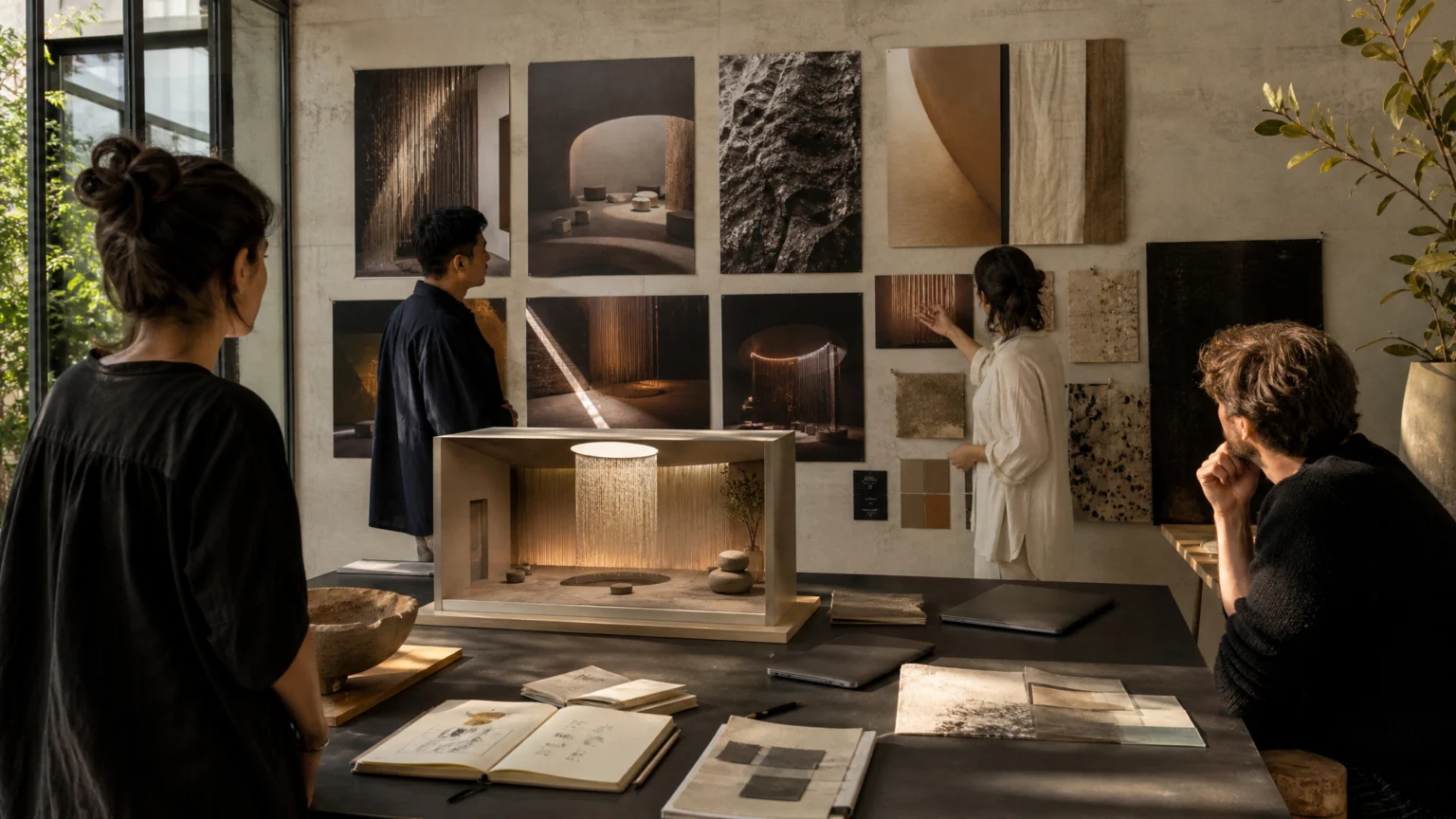
The straight-line version of a design career looks tidy on paper. Pick a discipline, refine a style, move up. Real work tends to resist that outline, especially in the art world, where one designer may move from agency campaigns to in-house systems, freelance client work, or installations that fill a room instead of a page.
That shift in perspective matters early. A career does not lose strength because it bends. Often, the turn is where a designer learns scale, constraint, collaboration, and the difference between making a personal mark and making work that has to function in public.
Design work rarely stays in one format
Three career paths make that clear. One designer started at BBDO New York and later moved toward immersive room installations. Another worked at Donlen and in college sports marketing before running her own design service. A third balanced in-house work while opening her own studio.
These are not detours. They show how graphic design stretches across employers, surfaces, and working styles. The same visual judgment can carry from campaign work to environments people walk through, and from internal brand stewardship to independent client service.
For students and early-career designers, that is a useful correction. The first job does not have to predict the whole future. A portfolio may point one way while a career develops its own timing through adjacent roles, institutional work, and freelance assignments that sharpen different skills.
Brand systems sharpen judgment
Professional design often asks for discipline before self-expression. Working for an organization means having a specific brand the artist has to contain themselves within. That can sound limiting at first, especially to designers trained to prize originality.
In practice, those limits can improve the work. A strong brand framework forces decisions about proportion, color, tone, and hierarchy. It turns taste into judgment, and helps a designer learn where a signature adds clarity and where it gets in the way.
In-house roles make that especially visible because the audience is close.
Your clients are your coworkers.
That changes the direction of feedback. The work is not a one-time handoff to an outside client. It becomes an ongoing conversation with people who live inside the system every day.
This is one reason early brand training matters. A designer who can work confidently inside an identity system usually adapts faster across posters, social graphics, presentations, event materials, and internal communications. Pieces such as accessible color palette systems that still express personality show how much craft lives inside those boundaries.
Freelance and in-house roles build different kinds of ownership
Freelance work and in-house work are often framed as opposites, but they teach complementary habits. In-house roles build consistency, patience, and fluency in one brand voice. Freelance work demands self-direction, client management, and the ability to define scope before the visual work begins.
Doing both can be demanding, but it also reveals where a designer wants more authorship. Opening a studio while holding an organizational role is not just a business move. It is one way to test how much independence, risk, and responsibility fits the life behind the work.
That distinction matters in a portfolio. In-house projects often show system thinking. Freelance work can show range, adaptability, and how a designer handles ambiguity. Together, they offer a more honest picture than polished outcomes with no context around them.
Installation work changes the scale of graphic thinking
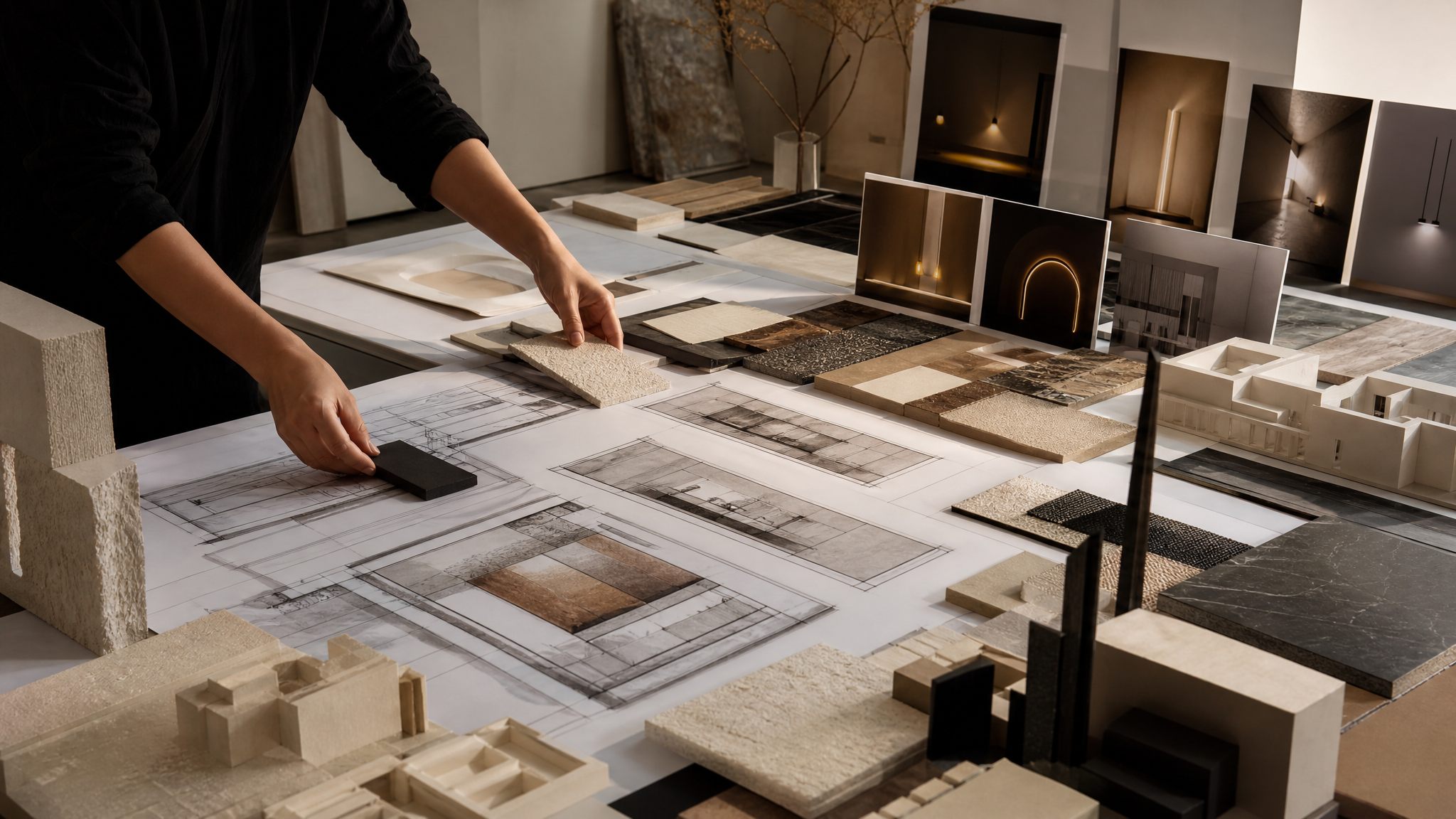
A move from agency work into immersive room installations is more than a change of medium. It shows how graphic thinking can become spatial. Walls, lighting, surfaces, and the way people move through a room all become part of the brief.
This kind of work exposes a useful truth. Design is not just about making an object look right. It is about shaping encounter. In an installation, viewers do not simply read a message. They enter it, approach it from different angles, and feel its scale with their bodies.
The same lesson applies in smaller brand settings. Environmental graphics, event branding, pop-up retail, and exhibition systems all rely on placement, sequence, and legibility in motion. That same spatial awareness appears in how graphics begin doing architectural work in the city.
Ordinary assignments often carry the real education

Creative careers can look glamorous from a distance, especially once installation work or independent practice enters the frame. Most growth comes from less dramatic tasks: revising a layout for the fifth time, adapting a campaign to a new format, or making a brand system hold together across teams that notice different details.
One piece of advice from these career stories stays useful because it travels so well.
Always look for what you can learn from something.
That mindset keeps entry-level work from feeling disposable. It turns each assignment into a study in process, client language, review habits, or production limits.
For students, that can be reassuring. A college sports marketing role, an internal design desk, or a first freelance brief may not resemble the dream job yet. Each one can still teach file discipline, stakeholder communication, and the practical logic behind visual decisions. Even a short, constrained brief can speed that education, much like a one-hour poster assignment can teach professionalism through real constraints.
Students need a fuller picture of working designers
Career conversations become more useful when they show more than finished portfolios. Students benefit from hearing how designers move across sectors, how they handle branding limits, and how they decide between stability and independence. Those details make the profession easier to read.
That matters in the art world, where job titles can be loose and paths rarely line up cleanly. Graphic design, experiential work, in-house communication, and freelance services may sit under different labels, but they share tools, judgment, and visual discipline. Seeing those links helps emerging designers build options instead of waiting for one perfect lane.
There is room for designers who want their own studio, designers who thrive inside institutions, and designers who shift between both. The real pattern is simpler: strong creative work can be built through many structures, as long as the designer keeps learning how to work with people, systems, and space.
 Icon Template
 Icon Template
 Logo Template
 Logo Template