Choosing the Right Lens for Product Photography: Beyond Focal Length
Imagine setting up a perfect shot of a handcrafted watch, only to find your lens can’t focus close enough to capture the intricate dial. Or perhaps you’re photographing a sleek laptop, and the wide-angle lens you chose distorts its elegant lines. These common frustrations highlight a crucial point: selecting the best camera lens for product photography goes far beyond simply picking a focal length. It’s about understanding how a lens interacts with your camera system, the scale of your product, and the desired visual outcome.
A standard 50mm prime lens, for instance, might offer a natural perspective for a medium-sized ceramic mug. However, for a delicate piece of jewelry, that same 50mm lens might prevent you from achieving the necessary close-up detail, demanding a dedicated macro lens instead. This comparison explores practical lens options, focusing on how different lenses address specific product photography challenges and help you avoid common pitfalls.
Key Lens Criteria for Effective Product Photography
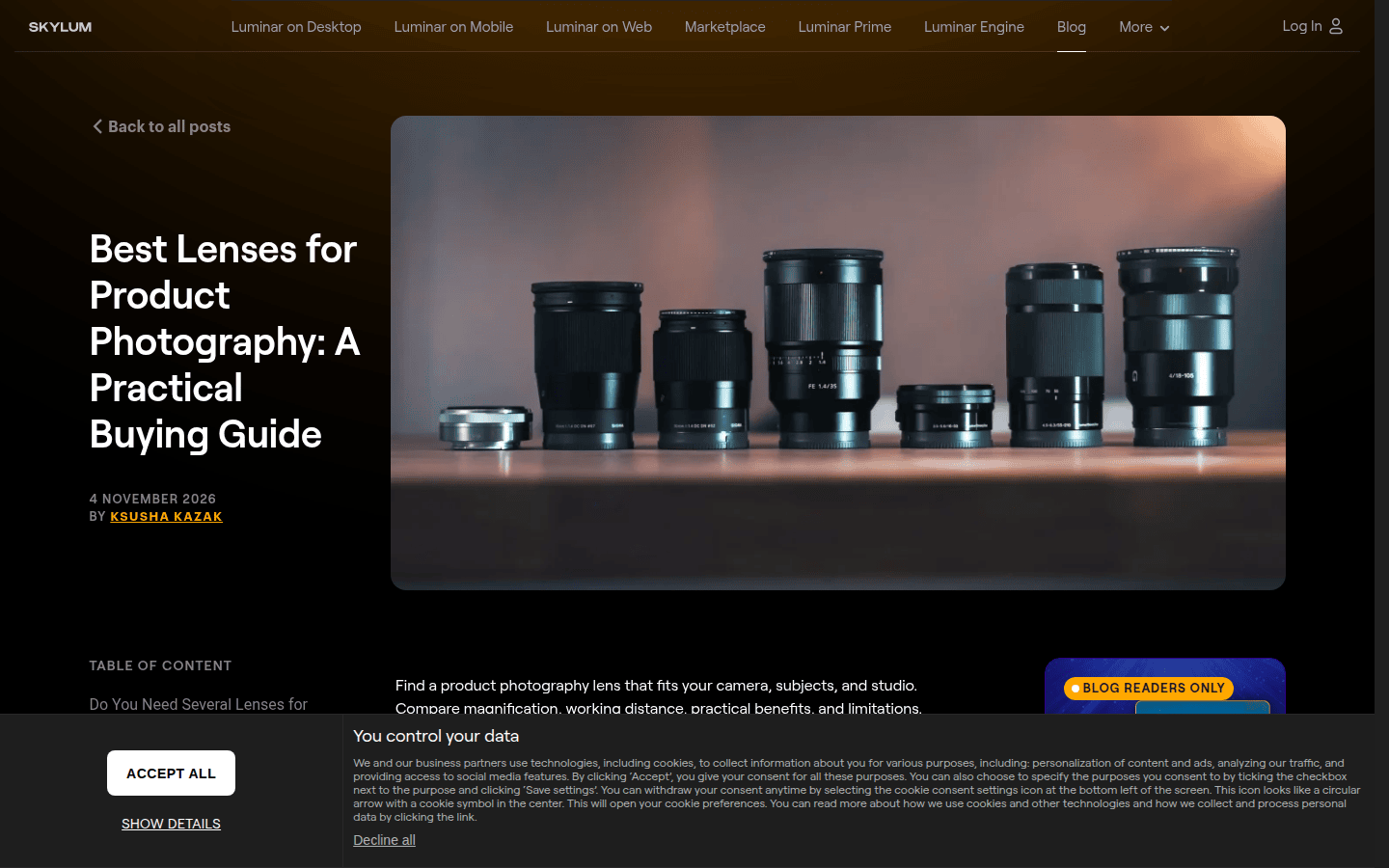
Before exploring specific lens models, it’s essential to grasp the characteristics that define a lens’s suitability for product photography. These factors often outweigh a lens’s maximum aperture, as product photography typically uses smaller apertures for greater depth of field and sharpness across the item.
- Camera-system compatibility: This is the foundational requirement. A lens must physically mount to your camera body and be electronically compatible. Lens mounts differ significantly between brands like Canon, Nikon, and Sony, and also between full-frame and crop-sensor (APS-C, DX) camera formats.
- Close-focusing ability and minimum focusing distance: For detailed product shots, the lens’s ability to focus closely is paramount. Minimum focusing distance is measured from the camera’s sensor plane to the subject. A shorter minimum focusing distance allows you to fill the frame with smaller objects, capturing fine textures and details.
- Working distance for tabletop setups: This refers to the physical space between the front of your lens and the product. A longer working distance is often preferred, especially for macro shots, as it allows for better lighting setup and prevents the lens from casting shadows on the product.
- Focal length suitability for small vs. medium products: Focal length influences perspective and magnification. Shorter focal lengths (e.g., 24-35mm) can introduce distortion if too close, while longer focal lengths (e.g., 85-105mm) compress perspective and are often preferred for a more natural, flattering look.
- Distortion and perspective control: While perspective is primarily determined by camera position, the focal length of a lens can exaggerate or minimize perceived distortion, particularly at wider angles. Lenses designed for product work often minimize optical distortions, ensuring accurate representation.
- Stabilization or handling features: While a tripod is standard for product photography, optical image stabilization (IS, VR, OSS) can be beneficial for handheld shots or when fine-tuning composition without a locked-down setup. It helps mitigate minor camera shake, ensuring sharper images.
Considering these criteria helps narrow down choices to lenses that will genuinely enhance your product photography workflow, ensuring your images are sharp, well-composed, and accurately represent your items.
For more on ensuring your product photos look their best, consider this guide on fixing color and lighting issues.
Macro Lenses: Unlocking Intricate Details
When your products are small—think jewelry, electronics components, or intricate crafts—a macro lens becomes indispensable. These specialized lenses are engineered to achieve high magnification, often allowing for 1:1 (life-size) reproduction of the subject on the camera sensor. This capability is critical for showcasing the minute details that make small products unique.
Canon EF 100mm f/2.8L Macro IS USM
The Canon EF 100mm f/2.8L Macro IS USM is a popular choice for Canon users engaged in detailed close-up product work. Its 100mm focal length on a full-frame camera provides a comfortable working distance. This prevents the lens from shadowing the subject and allows ample space for precise lighting adjustments. The ‘L’ designation signifies Canon’s professional-grade optics, guaranteeing exceptional sharpness and minimal distortion. Its image stabilization (IS) is a valuable asset, particularly if you need to make minor handheld adjustments or work in challenging lighting conditions.
Best for: Detailed close-up product work where precise focus and ample working distance are critical for showcasing intricate features.
Limitations: Exclusively for Canon EF mount cameras, limiting its use to other systems.
Nikon AF-S DX Micro NIKKOR 40mm f/2.8G
For Nikon DX (crop-sensor) camera owners, the Nikon AF-S DX Micro NIKKOR 40mm f/2.8G offers a compact and affordable entry into macro photography. While its 40mm focal length (equivalent to roughly 60mm on full-frame) means a shorter working distance compared to longer macro lenses, it’s well-suited for smaller product setups where space is limited. This lens is praised for its sharpness and ability to render fine details, making it a strong candidate for small items like coins, stamps, or small cosmetic products. It provides an excellent balance of performance and portability for DX users.
Best for: Nikon DX users seeking a compact macro lens for close-up work in confined spaces, ideal for small collectibles or beauty products.
Limitations: Only compatible with Nikon DX-format cameras, and the shorter focal length can mean less working room, requiring careful lighting placement.
Sony FE 90mm f/2.8 Macro G OSS
Sony full-frame mirrorless users often turn to the Sony FE 90mm f/2.8 Macro G OSS for their detailed product photography needs. This lens combines a versatile 90mm focal length with optical SteadyShot (OSS) image stabilization. This feature is particularly helpful for maintaining sharpness, especially in controlled studio environments where subtle camera shake can still occur. It delivers excellent image quality, making it a solid choice for high-resolution macro capture across a range of small to medium-sized products, from electronics to artisanal crafts.
Best for: Full-frame Sony camera owners requiring a stabilized macro lens for detailed product shots, ensuring crisp results even with minor movement.
Limitations: Designed specifically for Sony E-mount full-frame cameras, limiting cross-system compatibility.
Standard and Short Telephoto Primes: Versatile Options for Medium Products

For medium-sized products like apparel, electronics, or food items, standard and short telephoto prime lenses offer a natural perspective and excellent sharpness. These lenses typically fall in the 50mm to 85mm range on a full-frame camera and are known for their ability to render subjects with a pleasing, undistorted view. They provide a balanced perspective that closely mimics human vision, making them ideal for a wide array of product types.
Why a 50mm Lens is Often Recommended
A 50mm lens, often affectionately called a “nifty fifty,” is frequently recommended for product photography because it provides a view that closely matches human vision on a full-frame camera. This results in natural-looking images without exaggerated perspective, making it ideal for straightforward tabletop compositions and general product shots. Its wide aperture (often f/1.8 or f/1.4) can also be useful for isolating products with shallow depth of field, though product photography typically uses narrower apertures for maximum sharpness across the entire item.
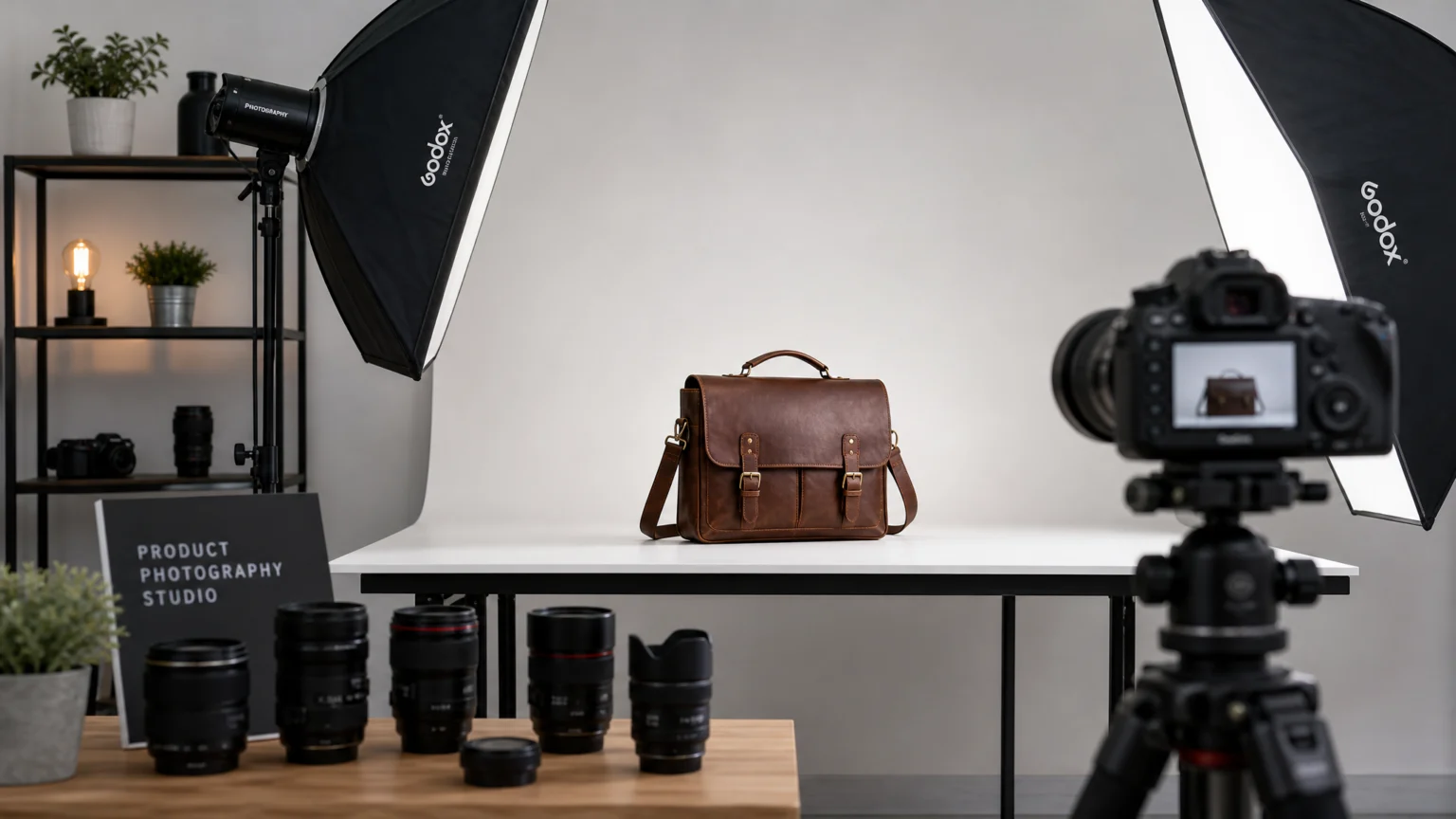
For example, photographing a handbag with a 50mm lens from a moderate distance will present it realistically, capturing its true proportions. Conversely, using a wider lens from the same distance might distort its shape. While a 50mm lens is versatile, moving too close with it can still introduce some distortion, so maintaining an appropriate working distance is key to achieving optimal results. This balance of natural perspective and versatility makes the 50mm a cornerstone for many product photographers.
Another excellent option for medium-sized products is an 85mm prime lens. On a full-frame camera, an 85mm lens offers a slightly more compressed perspective than a 50mm, which can be advantageous for flattering product shapes and minimizing any potential distortion. This focal length is particularly effective for items where you want to create a sense of depth without making the product appear too wide or too narrow. It also provides a comfortable working distance, allowing for ample space to arrange lighting and props without interfering with the shot.
Consider an 85mm lens for items like small appliances, footwear, or even food photography where you want to isolate the subject with a pleasing background blur while maintaining a natural, undistorted view. The slightly longer focal length helps to separate the subject from its surroundings more effectively than a 50mm, contributing to a more professional and polished look. Both 50mm and 85mm primes offer superb optical quality, making them strong contenders for any product photography kit.
Making Your Lens Decision: Matching Tools to Tasks

The decision ultimately comes down to your specific needs and the types of products you photograph most often. If your primary focus is on small, intricate items requiring extreme close-ups, a dedicated macro lens in the 70-105mm range (full-frame equivalent) will be your best investment. This focal length range provides an optimal balance of magnification and working distance, allowing you to capture fine details without casting shadows or feeling cramped.
If your products are larger, or if you need a versatile lens for a variety of items, a 50mm or 85mm prime lens can be an excellent starting point. These lenses offer a natural perspective, are often more affordable than specialized macro lenses, and provide superb image quality for general product shots. Remember to always prioritize lens compatibility with your camera system first, then consider the close-focusing ability and working distance required for your typical product sizes. A well-chosen lens is a critical tool for creating compelling product images that resonate with your audience. Another useful checkpoint is The Best Lenses for Product Photography in 2026.
A useful resource for general product photography advice is the Adobe guide to effective product photography, which reinforces the importance of lens choice for different items.
 Logo Template
 Icon Template
 Logo Template
 Logo Template