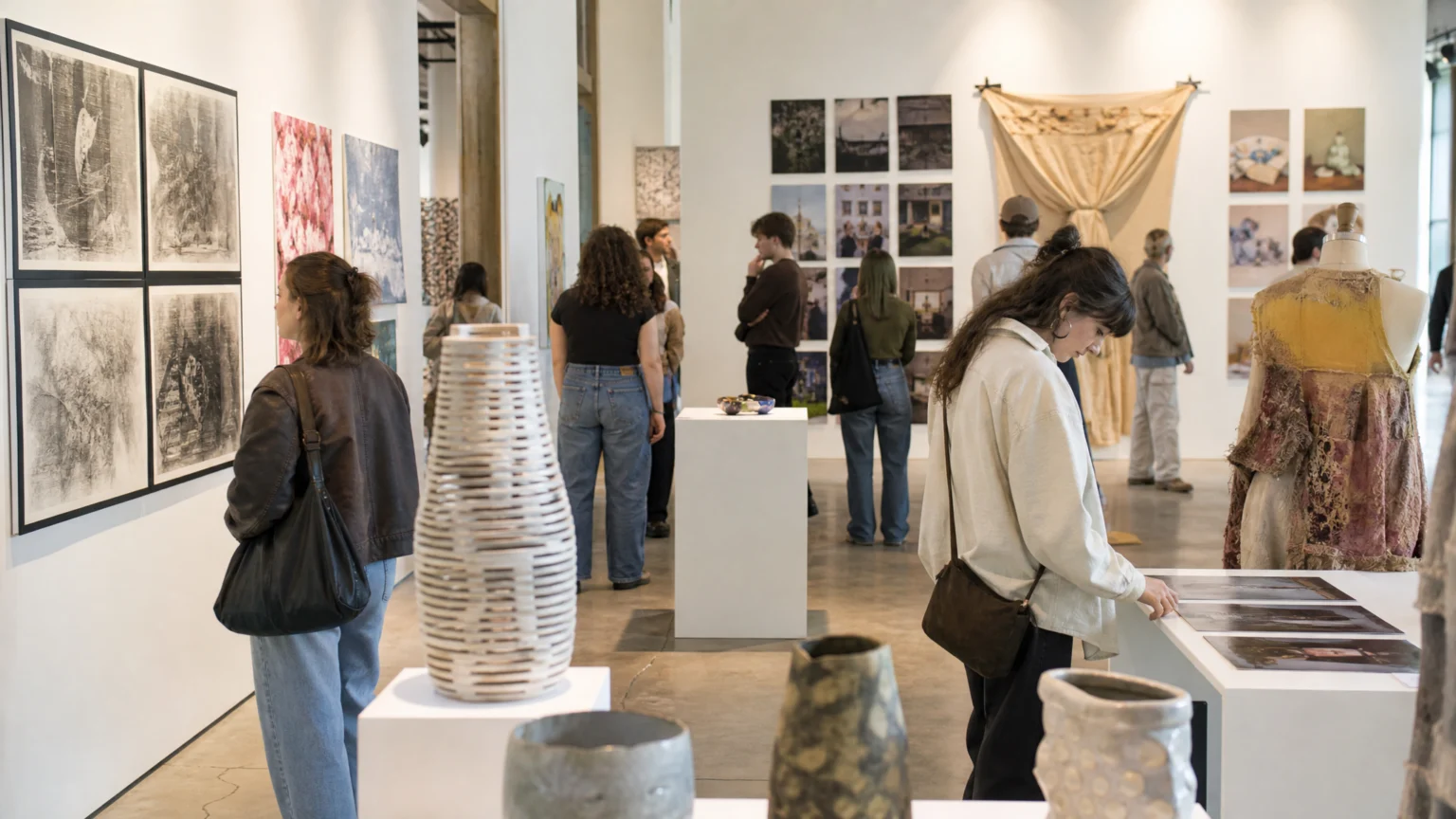
The first thing this exhibition makes visible is access. You can see it in sharper prints, riskier material choices, and pieces that look like they were allowed to change while they were being made.
Made It Here! gathers student work created with campus art facilities and equipment, from printmaking and photography to fashion and fabrication. The exhibition includes 20 artists and approximately 50 works made across eight facilities. Instead of treating creativity as a private spark, it presents making as something built in rooms full of machines, materials, and knowledgeable people.
That framing matters because finished work is often discussed as if it arrived fully formed. Here, facilities and staff stay inside the picture. They shape the surface, timing, and range of what becomes possible.
Access leaves formal evidence
When one exhibition spans printmaking, photography, fashion, illustration, graphic design, and fabrication, the visual field widens quickly. Each discipline brings its own surfaces, limits, and decisions. Seen together, the work makes a plain argument: strong outcomes often carry the mark of the place where they were made.
Sometimes that mark is technical, like the crisp edge of a print or the control in a lighting setup. Sometimes it is material, in stitched garments, fabricated objects, layered paper, or altered photographs. The value is not polish alone. Access expands the set of choices an artist can actually test.
That is a practical point for any studio, classroom, or campus program. Creative quality does not come only from selecting talented people. It grows when students can move between facilities, try methods across disciplines, and keep working long enough to find a better answer.
Process stays in the frame
The exhibition is explicitly framed as a celebration of the creative work, the campus facilities, and the staff who run them. That balance feels precise. Production environments influence outcomes, yet they are often edited out once the final object reaches the wall.
Here, the enabling conditions remain legible. The show becomes more than a display of finished objects. It reads as a portrait of a creative ecosystem, where technicians, equipment, and shared spaces influence the result.
That is part of why an exhibition like this can feel more honest than a tightly branded showcase. It leaves room for irregularity. A print can show repeated attempts, a fabricated piece can retain the logic of its construction, and a photograph can let light lead the image rather than disappear behind it.
Material accidents earn their place
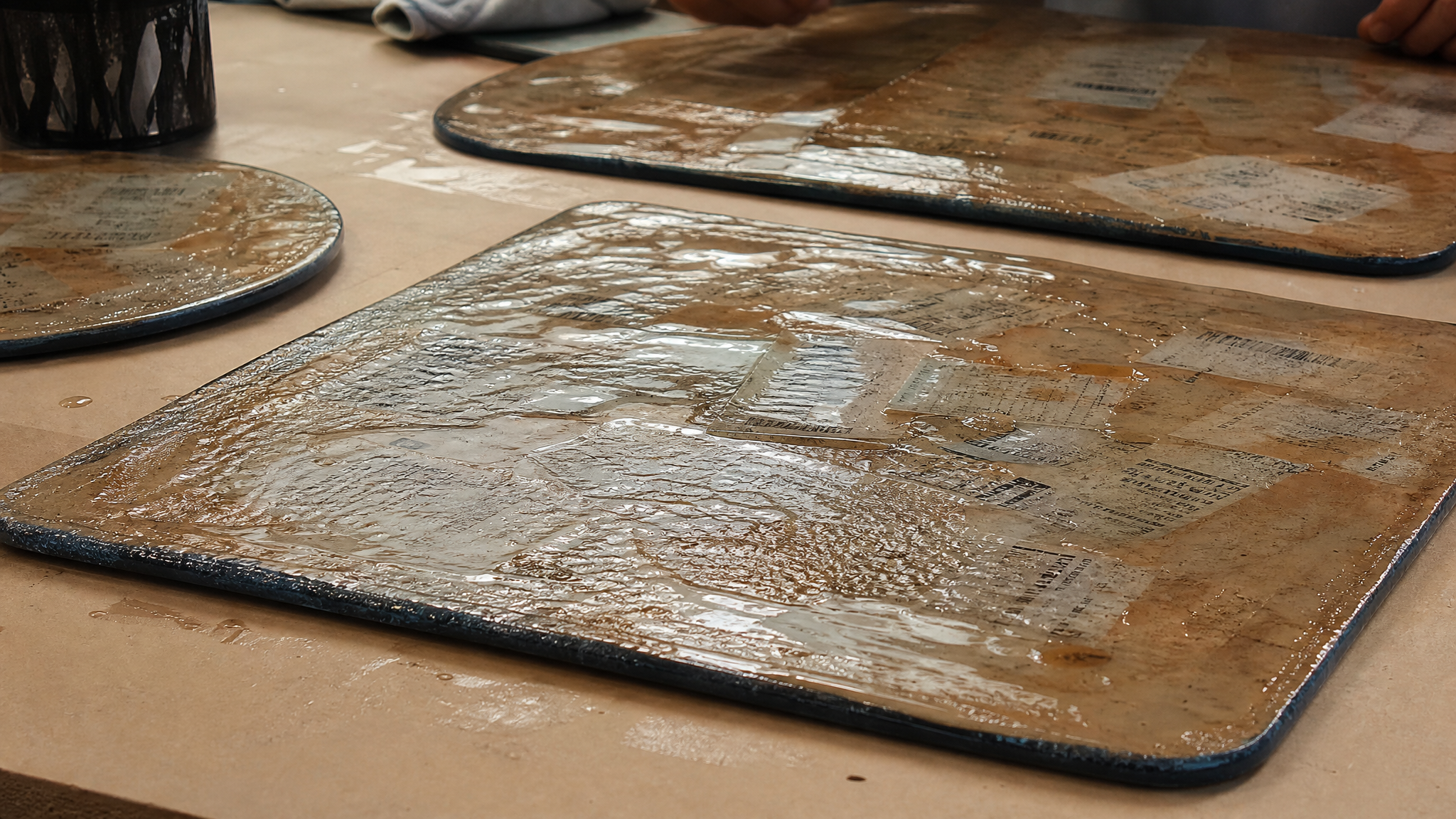
Some of the strongest details come from process rather than from a concept statement. Duffy laminated placemats in the Makerspace, and the heat affected some of the ink on the receipts. If the goal were strict control, that shift might read as a flaw. In this context, it becomes part of the piece’s force.
Curran kept bumpy outlines that added texture. That choice reveals sharp visual judgment. Instead of sanding every edge into obedience, the work lets an irregular surface do real design work.
Castro made about 15 to 18 prints, and only about six turned out well. Anyone who has spent time with print, photography, or fabrication will recognize that ratio. Iteration is rarely graceful from the inside, but it is often where the final signature appears.
That same logic shows up in handmade collage photography and visual signature, where process marks become part of the image language instead of something to hide.
Repurposed objects carry more charge
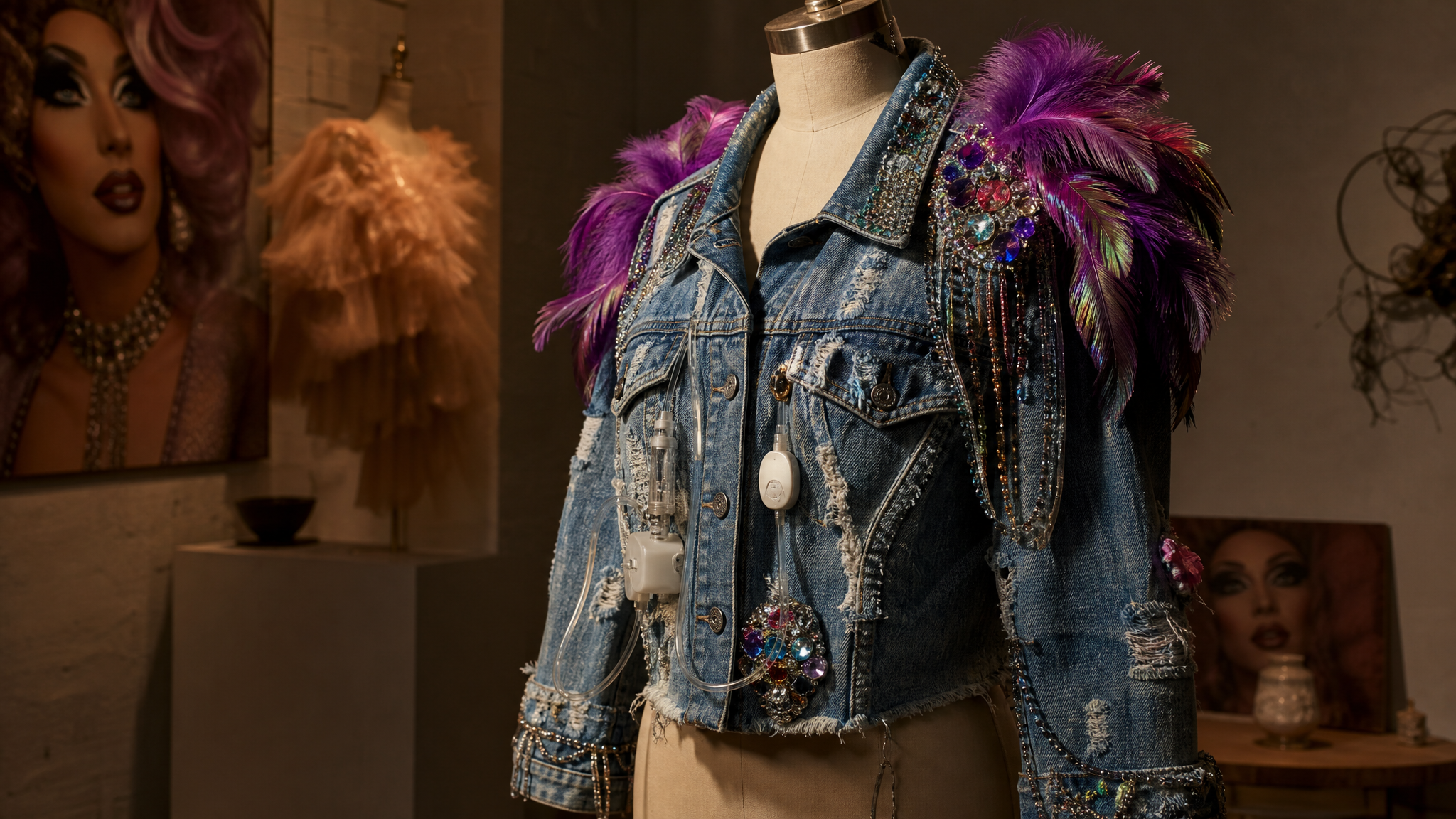
One project turns personal medical equipment into costume design. An old denim jacket, decorated with trinkets and a former insulin pump, became a new outfit for Michael Kowalkowski’s drag persona, Magic Michael.
The transformation works because the jacket is not simply embellished. It is recoded. A medical object with one history enters a garment with another public role, and the piece gains force from that collision.
For designers, the reminder is straightforward. Meaning does not live only in pristine forms. It can come from attachment, memory, and the visible reuse of an object that already has a life.
Light takes the lead
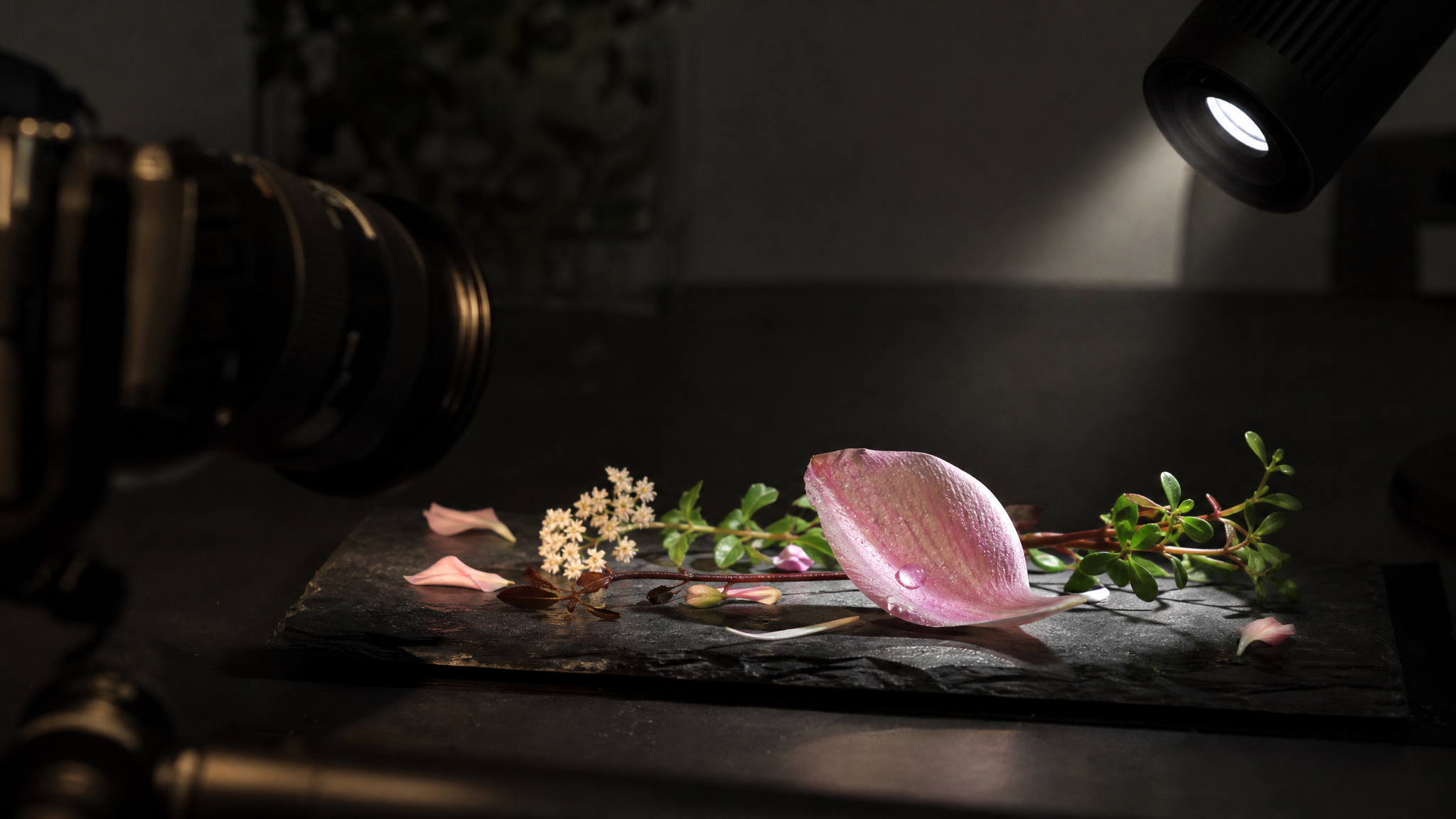
Another featured project focuses on macro photography and lighting. Its concept is concise: light shows small details, like a flower and a bush.
That sounds simple until you consider how often lighting is treated as support rather than subject. In close-up photography, light determines edge, depth, and focus. It decides what arrives first in the eye and what waits a beat longer.
That is a useful approach for anyone working with still images. Before adding effects or motion, it helps to ask whether the image already carries enough structure in its lighting. If it does, subtle treatments such as photo parallax effects can extend that depth without overpowering it.
For teams building image-heavy content, a consistent product photography workflow points to the same lesson: control over light and repeatable process often matter more than expensive styling.
Shared facilities widen confidence
An exhibition built across eight facilities naturally encourages crossover. A student working in illustration or graphic design can absorb methods from fabrication. A fashion student can benefit from photography setups. A printmaker can learn from digital output or physical assembly.
That kind of adjacency is hard to manufacture. It creates informal learning before anyone names it. Students see another process, borrow a method, or discover that a problem in one medium has already been solved in another.
For institutions, the implication is clear. When facilities are siloed too tightly, student work narrows. When spaces are legible, staffed well, and open to experimentation, the work tends to gain confidence without collapsing into sameness.
The exhibition’s scale supports that reading. Twenty artists and about 50 works across multiple disciplines is enough to show range while keeping material decisions visible.
Staff support belongs in the story
One of the smartest choices in this exhibition is naming the staff who run the facilities as part of the celebration. That is more than courtesy. It is an accurate account of how creative work gets made.
Tools do not teach themselves. Print shops, photo studios, makerspaces, and fabrication labs depend on people who maintain equipment, explain processes, troubleshoot failures, and help students recover from mistakes. Their contribution may be invisible in the final display, but it shapes what students are willing to attempt.
Once that support is acknowledged, the exhibition reads differently. It stops feeling like a set of isolated achievements and starts to look like a shared production shaped by resources, guidance, and persistence. The result is stronger work and a clearer picture of how practice actually happens.
 Logo Template
 Logo Template
 Logo Template
 Logo Template