
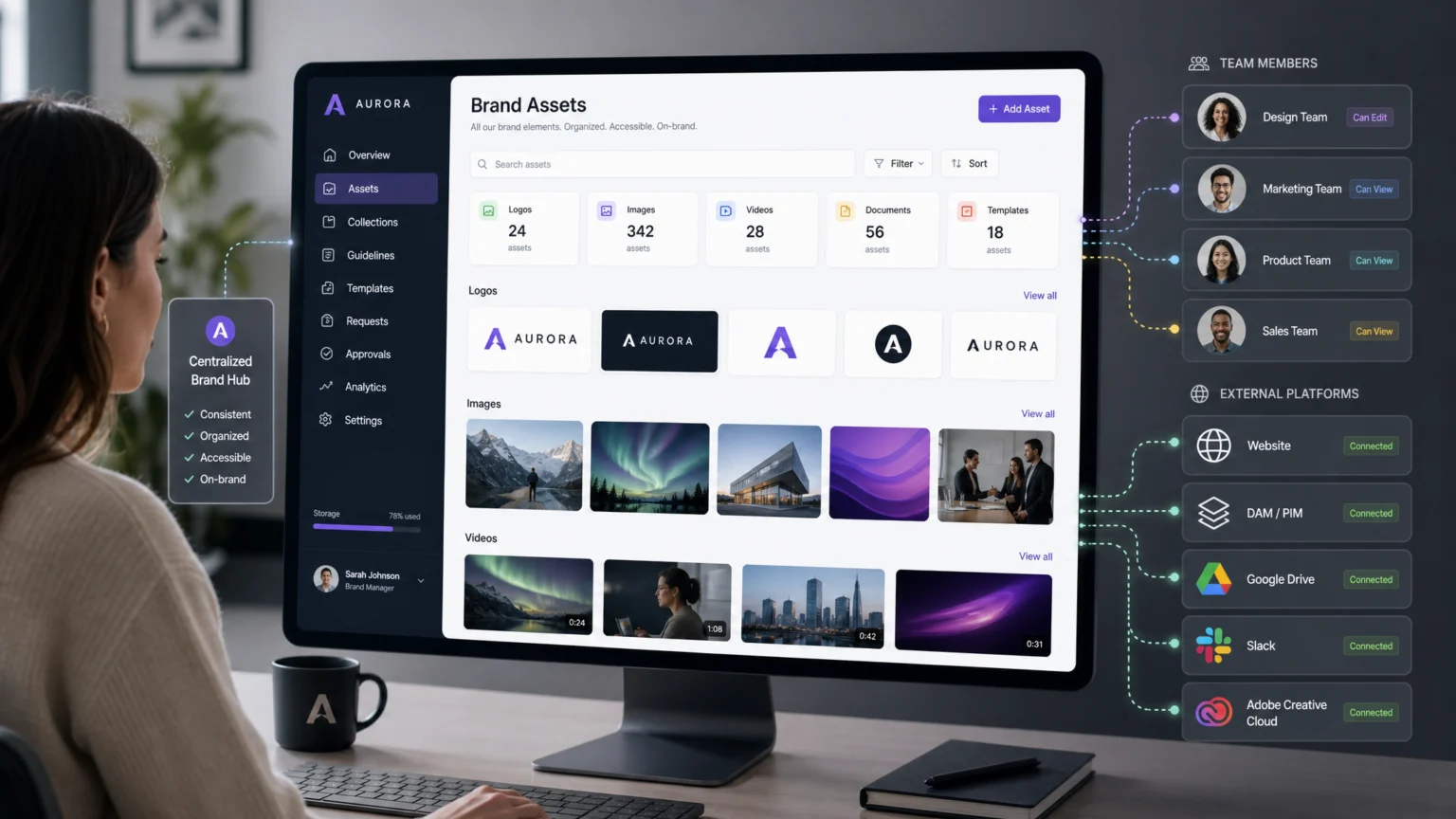
Imagine a new marketing campaign launching next week. Your team needs the latest logo, approved product shots, and specific brand fonts. But instead of a central hub, these assets are scattered: some on a designer’s hard drive, others buried in old email threads, and a few in a shared cloud folder with outdated versions. This fragmentation isn’t just an inconvenience; it actively undermines brand recognition and slows down creative workflows. Designers waste precious time searching, marketers risk using incorrect imagery, and legal teams struggle to track usage rights.
A brand asset management (BAM) platform solves this by centralizing all your brand materials. However, the goal isn’t merely to store files. It’s about establishing a governed system where every approved brand element—from logos and images to videos and guidelines—is easily accessible and controlled. This guide outlines practical steps to evaluate and select a BAM platform that supports your brand’s visual integrity and operational efficiency, ensuring your team always has the right assets at their fingertips.
1. Define Your Asset Storage and Organization Needs
Before diving into platform features, take a comprehensive inventory of your current and anticipated asset landscape. What types of assets do you manage? Are they primarily static images, or do you frequently work with large video files, interactive templates, or 3D renders? Consider not just the current volume, but also your projected growth over the next 3-5 years. A platform that barely meets today’s needs will quickly become a bottleneck.
Next, analyze your existing organizational structure. How do teams currently categorize files? Are there specific categories for campaigns, product lines, or regional markets? Some BAM platforms offer highly flexible metadata tagging and customizable folder hierarchies, allowing you to mirror your internal logic. Others might impose a more rigid structure, which could require adapting your workflows. For instance, Air presents digital asset management as a centralized system for storing, organizing, finding, approving, and distributing brand files, implying robust organizational features that could be a good fit for complex taxonomies.
Decision Scenario: A small design agency with 500 assets might prioritize ease of use and quick setup over extensive customization. Their primary need is a reliable, accessible repository. In contrast, a large enterprise managing 50,000 assets across multiple brands and regions will require a system that supports detailed metadata, advanced versioning, and granular access controls to maintain order and compliance. Understanding this scale difference is crucial for selecting a platform that won’t be outgrown too quickly.
2. Evaluate Permissions, Governance, and Version Control
Effective brand management hinges on strict control over who can access, edit, and publish assets. Without robust governance, even a centralized system can lead to inconsistencies and brand dilution. A brand management platform is commonly described as a governed place to store, access, and distribute brand assets, with controls such as approval workflows, version management, and user permissions.
Look for features like role-based access, where different user groups (e.g., designers, marketers, external agencies) have specific permissions tailored to their responsibilities. Version control is critical to prevent the accidental use of outdated assets; a platform should clearly display asset history and allow easy rollbacks to previous versions. Cloudinary’s guide frames selection around centralized storage, controlled access to approved files, and governance features like version control and permissions, highlighting these as core functionalities for maintaining brand integrity.
Example: Imagine a product launch where an old logo variant is accidentally used in an advertisement because it was still accessible. A robust BAM platform would prevent this by ensuring only the latest, approved version is available for download. It would also enforce an approval workflow for any new asset usage, requiring sign-off from relevant stakeholders before an asset can be published. Consider whether the platform allows for multi-stage approvals for critical assets, ensuring brand guidelines are met before assets are released. Frontify, for instance, positions itself with governance-oriented features for centralized brand material management, emphasizing control and compliance.
Frontify emphasizes governance features for managing brand assets centrally.
3. Assess Integrations with Existing Workflow Tools
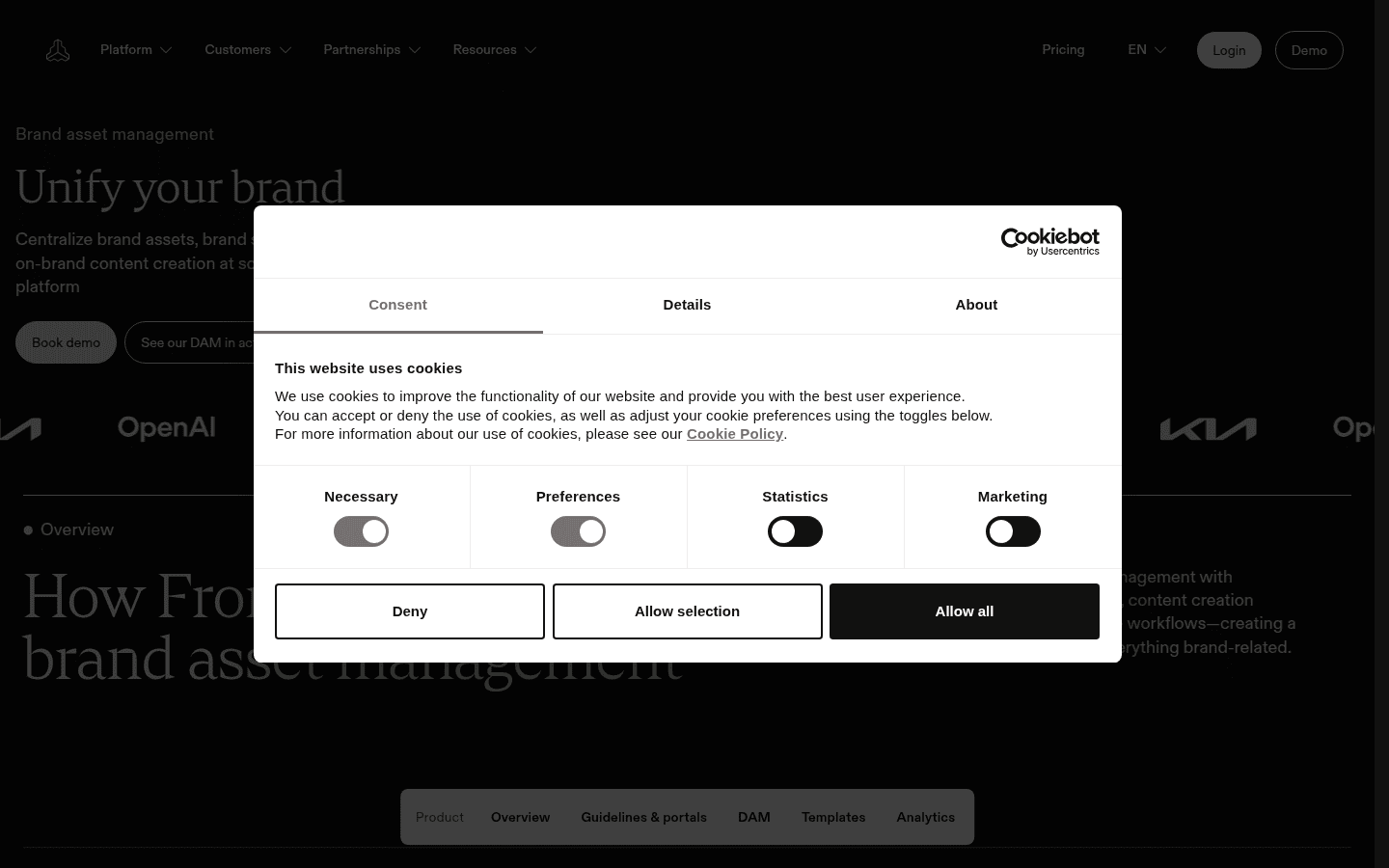
A BAM platform should enhance, not disrupt, your existing creative and marketing workflows. Seamless integration with the tools your team already uses is crucial for adoption and efficiency. Consider integrations with creative software (like Adobe Creative Suite), project management tools (like Asana or Trello), and content management systems (CMS) such as WordPress or Drupal.
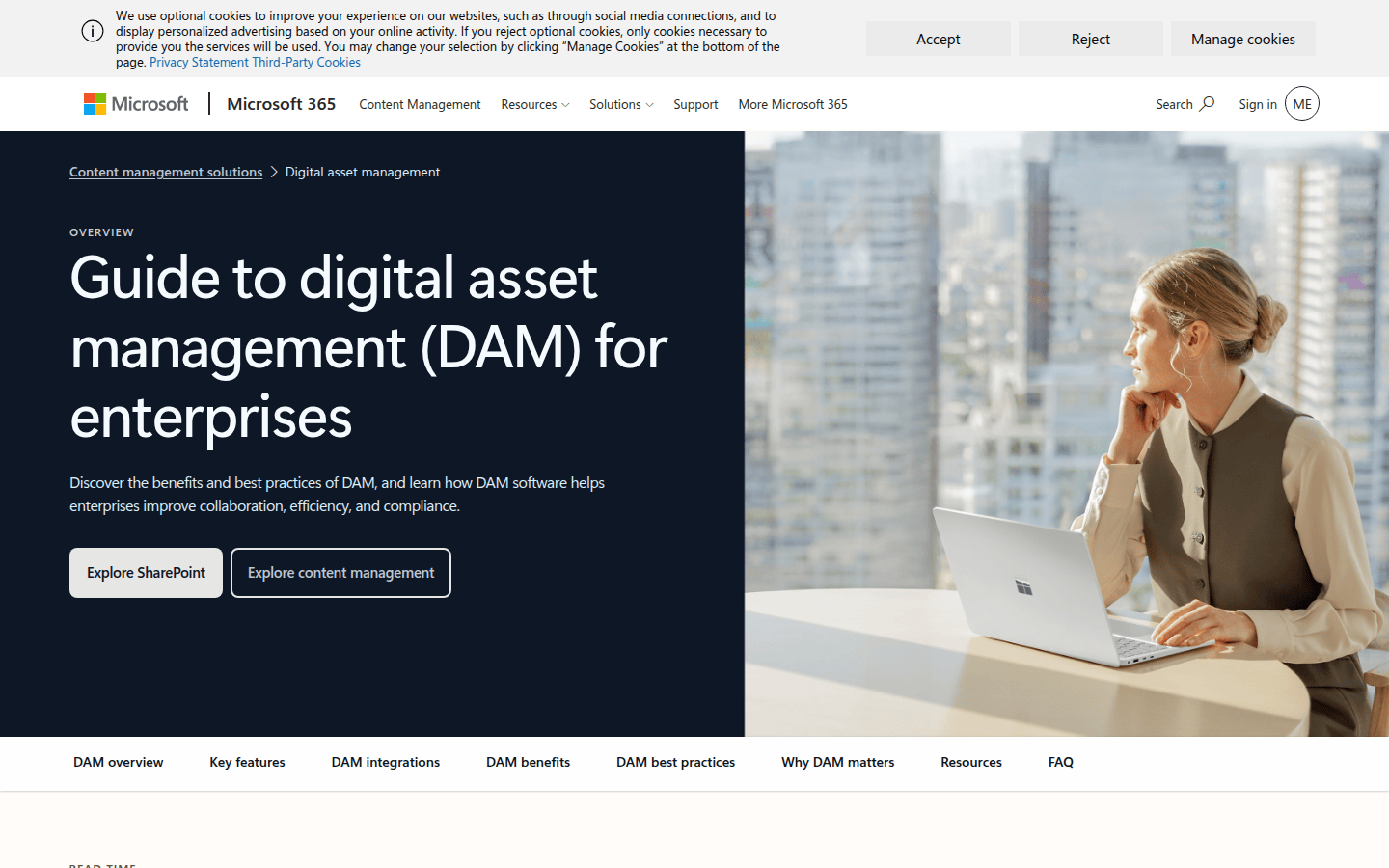
Microsoft’s DAM guidance emphasizes selecting a platform that fits enterprise needs and integrates with Microsoft 365 applications such as SharePoint and OneDrive. This is a key consideration for organizations heavily invested in the Microsoft ecosystem. Similarly, if your team relies on specific design or marketing automation tools, verify that the BAM platform offers native connectors or a robust API for custom integrations. A platform that requires manual asset transfers between systems will quickly negate its efficiency benefits.
Microsoft 365 provides guidance on integrating DAM with its suite of enterprise applications.
4. Understand Pricing Transparency and Procurement Fit
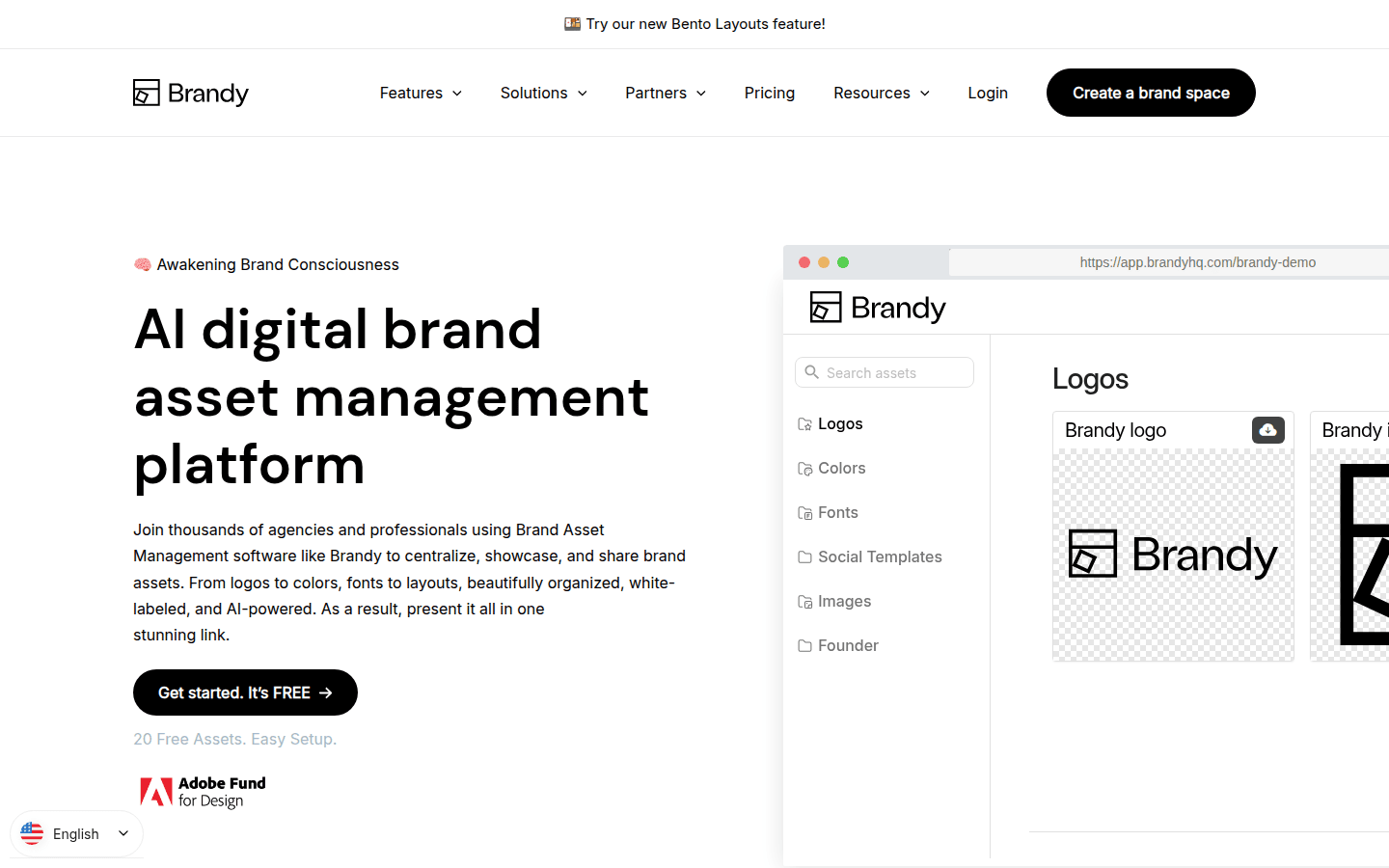
Pricing models for BAM platforms vary widely and can significantly impact your long-term budget. Some platforms offer tiered plans based on the number of users, storage limits, or asset count. Brandy’s public page indicates that a brand asset management platform may include tiered plans with limits on brand spaces, assets, and storage. This means you need a clear understanding of your current and projected usage to avoid unexpected costs.
Look for transparent pricing structures that clearly outline what is included in each tier. Hidden fees for additional storage, user seats, or advanced features can quickly inflate costs. Consider whether the platform offers a free trial or a demo to test its capabilities before committing. For instance, some providers might offer a basic plan for smaller teams and scale up to enterprise solutions with custom pricing. Always clarify potential overage charges and how easy it is to scale up or down as your needs evolve.
Brandy’s platform illustrates how tiered plans often include limits on assets and storage.
5. Assess Search, Tagging, and Approvals Workflow
The ability to quickly find the right asset is a primary benefit of a BAM platform. Evaluate the search capabilities: does it support keyword search, metadata filtering, and even AI-powered visual search? Effective tagging is foundational for discoverability; ensure the platform allows for customizable tags and categories that align with your brand’s taxonomy. A well-tagged asset library means less time spent hunting and more time creating.
Beyond search, consider the approval workflow for new assets or modifications. Can you define custom approval routes? Does the system notify stakeholders at each stage? A streamlined approval process reduces bottlenecks and ensures that only compliant assets are published. For example, a designer uploads a new campaign image, which then automatically routes to the marketing manager for review, then to legal for compliance, before being made publicly available. This structured approach minimizes errors and maintains brand consistency.
6. Support for Brand Portals or Style Guides
A comprehensive BAM platform often extends beyond simple asset storage to include features that help disseminate brand guidelines and create brand portals. A brand portal acts as a central hub where all brand elements, usage rules, and approved assets are clearly presented. This is particularly useful for external partners, agencies, and new employees who need quick access to brand standards without direct access to the full asset library.
Look for platforms that allow you to build customizable brand guidelines or style guides directly within the system. this helps that the guidelines are always linked to the actual assets, reducing the chance of misinterpretation. Some platforms, like Cloudinary, offer features that support the transformation and delivery of assets, which can be crucial for maintaining visual consistency across various digital touchpoints and ensuring assets are optimized for different channels.
Cloudinary’s guide highlights the importance of governance and asset transformation in BAM selection.
By systematically evaluating these six checkpoints, you can select a brand asset management platform that not only centralizes your visual assets but also reinforces your brand’s consistency and operational efficiency. A well-chosen BAM solution transforms scattered files into a strategic advantage, empowering your team to create with confidence and speed.
 Logo Template
 Logo Template
 Photo Template
 Photo Template