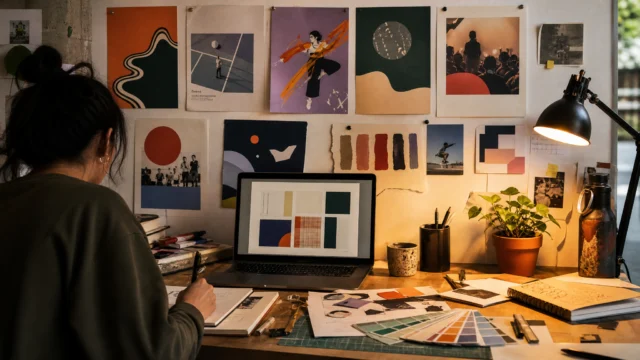
What stands out first in Jaleel Campbell’s work is the temperature. The forms are clean and controlled, yet they never turn distant. A hand sketch becomes an Illustrator file, machine-cut pieces become sewn figures, and the final result still feels intimate.
That sequence matters. It shows how precision can support feeling instead of flattening it.
Campbell is a multidisciplinary artist whose practice spans illustration, textiles, sculpture, and storytelling. Work with that much range can easily feel scattered, but recurring elements of line, shape, and pattern keep it coherent. They give the whole body of work a recognizable visual signature.
One visual language across materials
When an artist moves across formats, the real test is consistency without repetition. Campbell’s work is rooted in memory, identity, and the enduring influence of play, and those themes come through formal choices rather than surface decoration. Line does structural work. Shape carries character. Pattern holds attention and gives surfaces a pulse.
That consistency makes the practice easier to read. The materials change, but the same instincts keep showing up. A strong visual language often works this way: a few decisions travel well enough to hold together very different outcomes.
The digital-to-physical handoff does the work
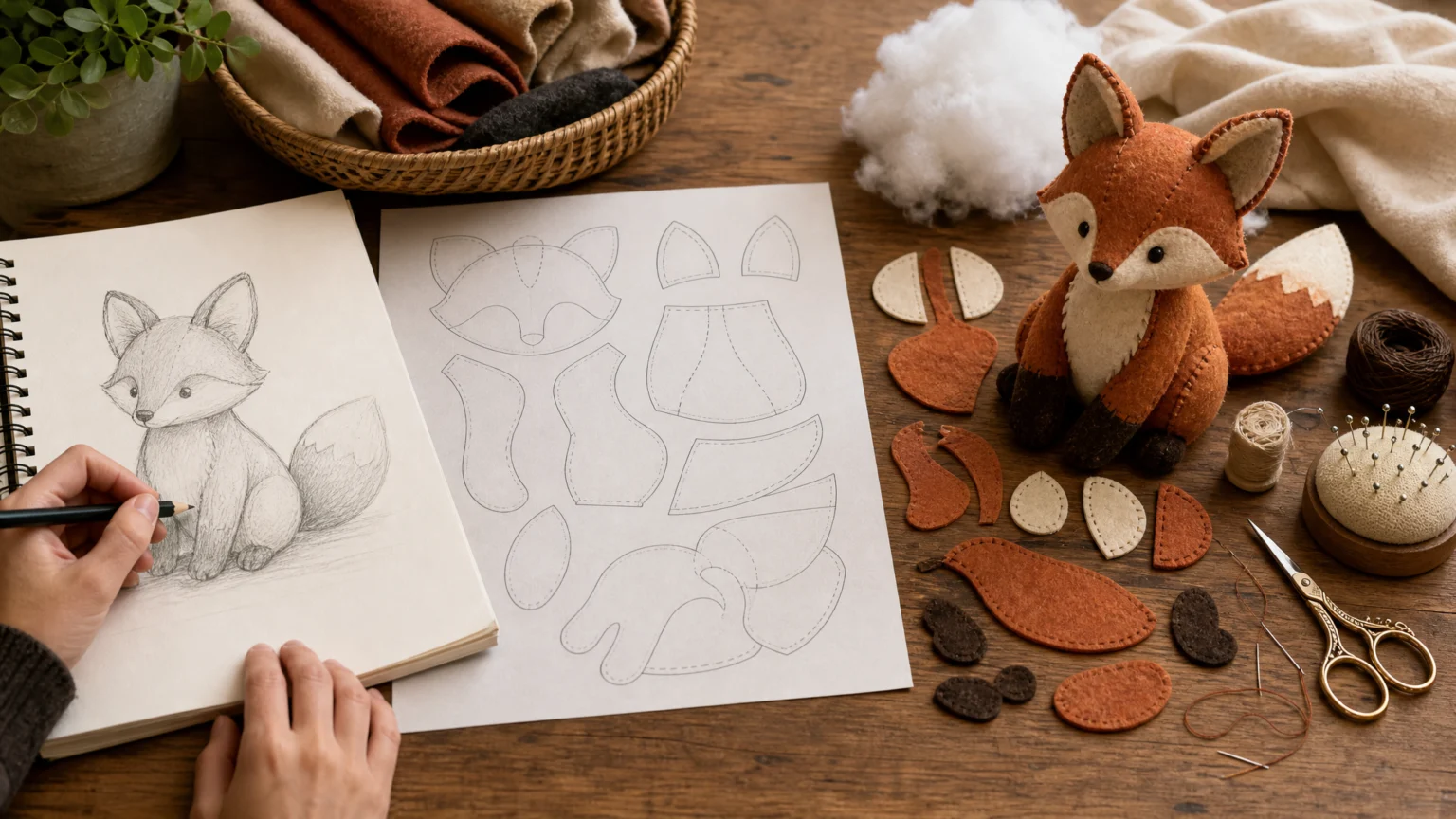
One of the clearest details in Campbell’s process is the making of his Jalethals dolls. He began sketching his first doll by hand in 2017, refined the design in Adobe Illustrator, cut each piece out using a Cricut machine, and finished every figure by sewing it by hand. That is more than a production note. It explains why the objects feel considered at every scale.
Hand sketching allows discovery. Illustrator brings cleanup, edge control, and proportion. Machine cutting introduces repeatable accuracy. Sewing returns touch, small variation, and the evidence of labor. The movement between those steps keeps the work from leaning too far into polished sterility or rough nostalgia.
There is a practical idea here for designers. Digital tools do not have to erase character. They can act as editing tools, helping an idea hold its shape before material and hand finish the piece.
Why the Jalethals dolls read as more than toys
The Jalethals dolls are hand-sewn felt sculptures positioned somewhere between toy, sculpture, and heirloom. That middle ground gives them their charge. A toy invites use, a sculpture asks for attention, and an heirloom carries time; bringing those roles together changes how the object is read before it is even touched.
This matters visually because category shapes expectation. If something sits only as a toy, surface play may be enough. If it sits only as sculpture, concept can dominate. An object that lives between categories needs form, finish, and emotional clarity working together.
Campbell’s background helps explain that balance. He earned a BFA in visual communications with a specialization in graphic design from Cazenovia College. You can feel that training in the controlled assembly of parts and in the way the figures hold a clear silhouette while still feeling personal.
Illustration still anchors the practice
Digital illustration remains an important part of Campbell’s work, including FORGOTTEN INNOCENCE. That matters because illustration often shows an artist’s underlying decisions most clearly. Before material enters the room, you can see the structure of the image: where line turns, how shape locks together, and how pattern directs the eye.
In a broader creative practice, illustration can function as a testing ground. Ideas become legible there first. The artist can push contrast, simplify forms, and refine proportion before those same instincts move into textiles or sculpture.
For anyone working in branding, editorial, or visual systems, that is a useful reminder. Drawing still has force as a design tool. Even when the finished work becomes an object, the image logic often arrives first.
What this process makes clear
Campbell’s work offers a practical model for keeping handmade feeling inside a disciplined workflow. The lesson is not to imitate the materials. It is to notice what each tool contributes, and when.
- Sketch by hand when the idea needs openness and discovery.
- Refine digitally when proportion, edges, and repeatable forms matter.
- Use machine processes when consistency supports the concept.
- Return to the hand when surface, texture, and care need to stay visible.
Just as important, keep a short list of formal elements that belong to the work across every medium. In Campbell’s case, line, shape, and pattern keep reappearing. That restraint allows the practice to expand without losing direction.
There is quiet confidence in work that knows when to be exact and when to leave room for touch. Campbell’s combination of illustration, textiles, sculpture, and storytelling shows that warmth does not come from rejecting technology. It comes from using each step with intent, then letting memory, identity, and play remain visible in the final form.
 Logo Template
 Photo Template
 Logo Template
 Photo Template