A restaurant can add locations quickly and still lose itself slowly. The break usually does not happen at the sign. It happens when the room, the service, and the meal no longer feel like parts of the same brand.
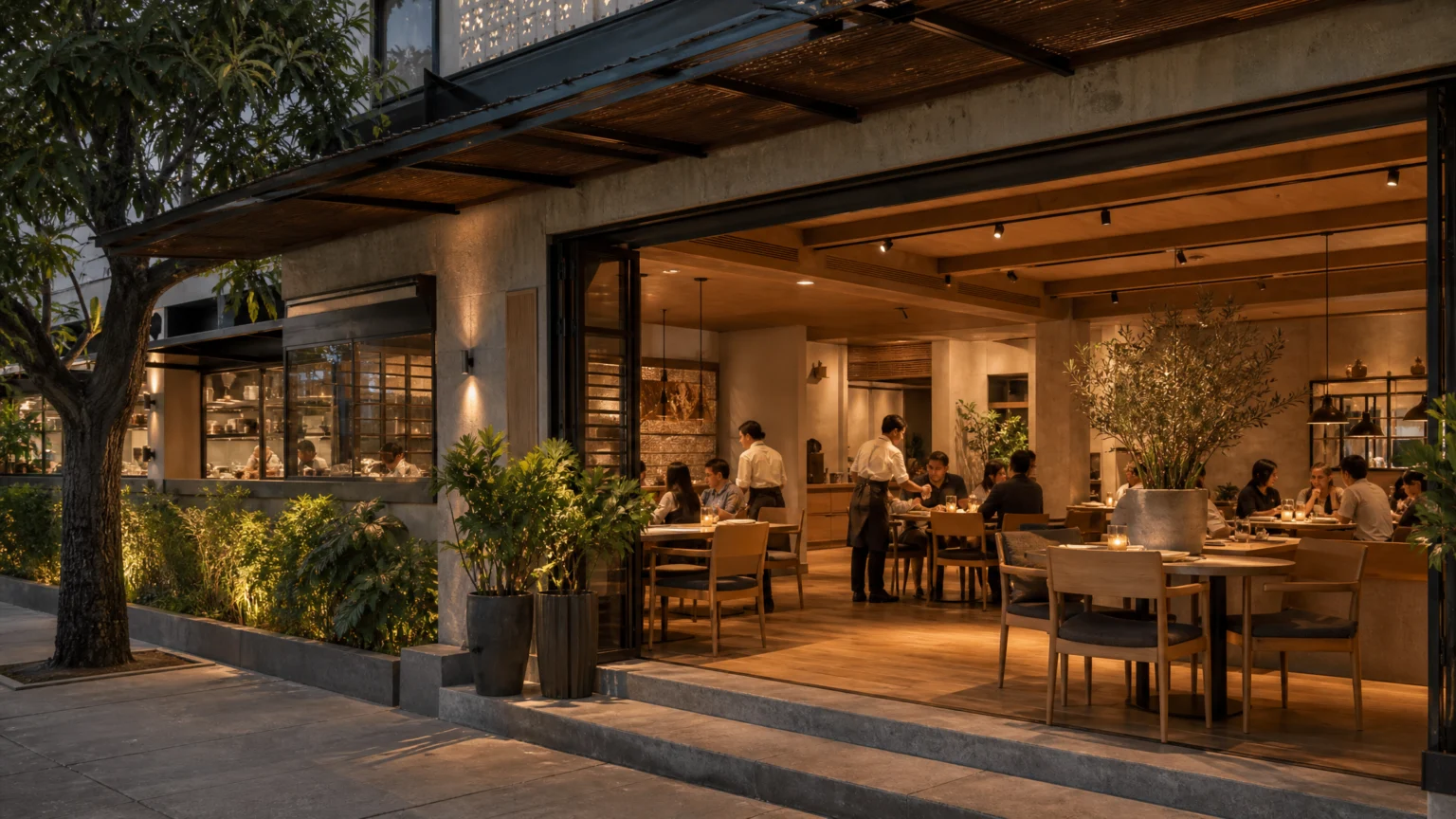
That makes expansion a design problem as much as an operational one. Building design, curb appeal, floor plans, standard operating procedures, and menu execution all need to reinforce brand identity. When those parts hold together, growth reads as coherent instead of improvised.
Brand identity has to extend past the mark
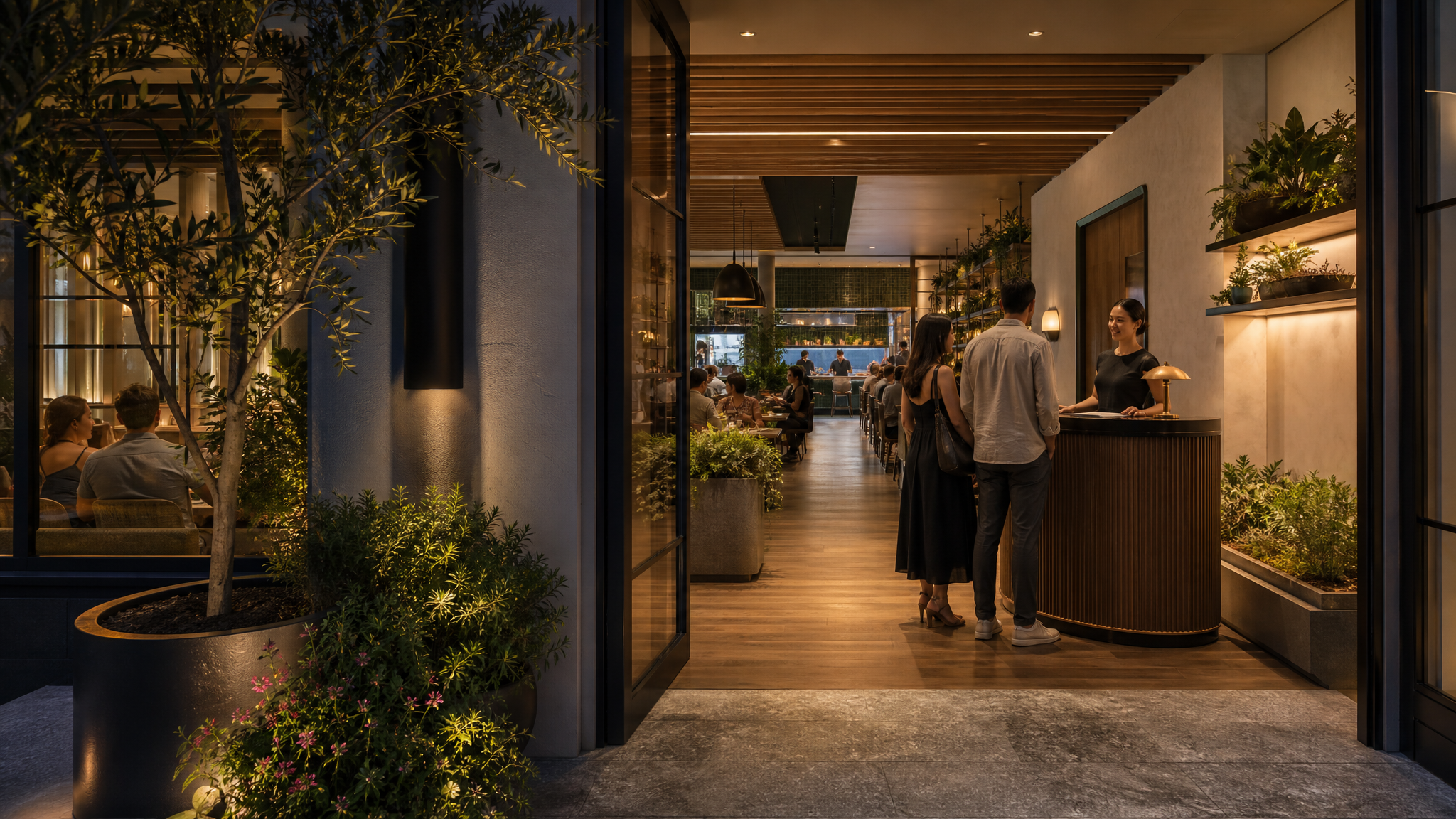
Restaurant branding often gets reduced to color, type, and signage. Those pieces matter, but expansion exposes a stricter test: guests read the whole environment. They see the exterior before they park, the layout before they order, and the food before they decide if the promise was real.
That makes the physical setting part of the brand system, not a decorative extra. Curb appeal sets expectation. Floor plans guide direction and comfort. Menu execution turns an abstract identity into something repeatable, plate by plate.
Rollout discipline matters for the same reason. The visible identity only stays intact when daily decisions keep carrying it forward.
Consistency is what guests actually measure
Customers do not separate corporate-owned locations from franchise-operated ones in their minds. They simply expect the same quality of food, service, and atmosphere every time they visit. That expectation becomes the real measure of brand performance.
For designers and operators, that shifts the brief. The task is not to create one beautiful location. It is to create a repeatable experience with the same cues, timing, and baseline feel across many locations.
Consistency does not require every room to feel dead or identical. It means the essential signals stay intact. A guest should understand where they are, what kind of care to expect, and how the place behaves within moments of arrival.
Operations are part of visual expression
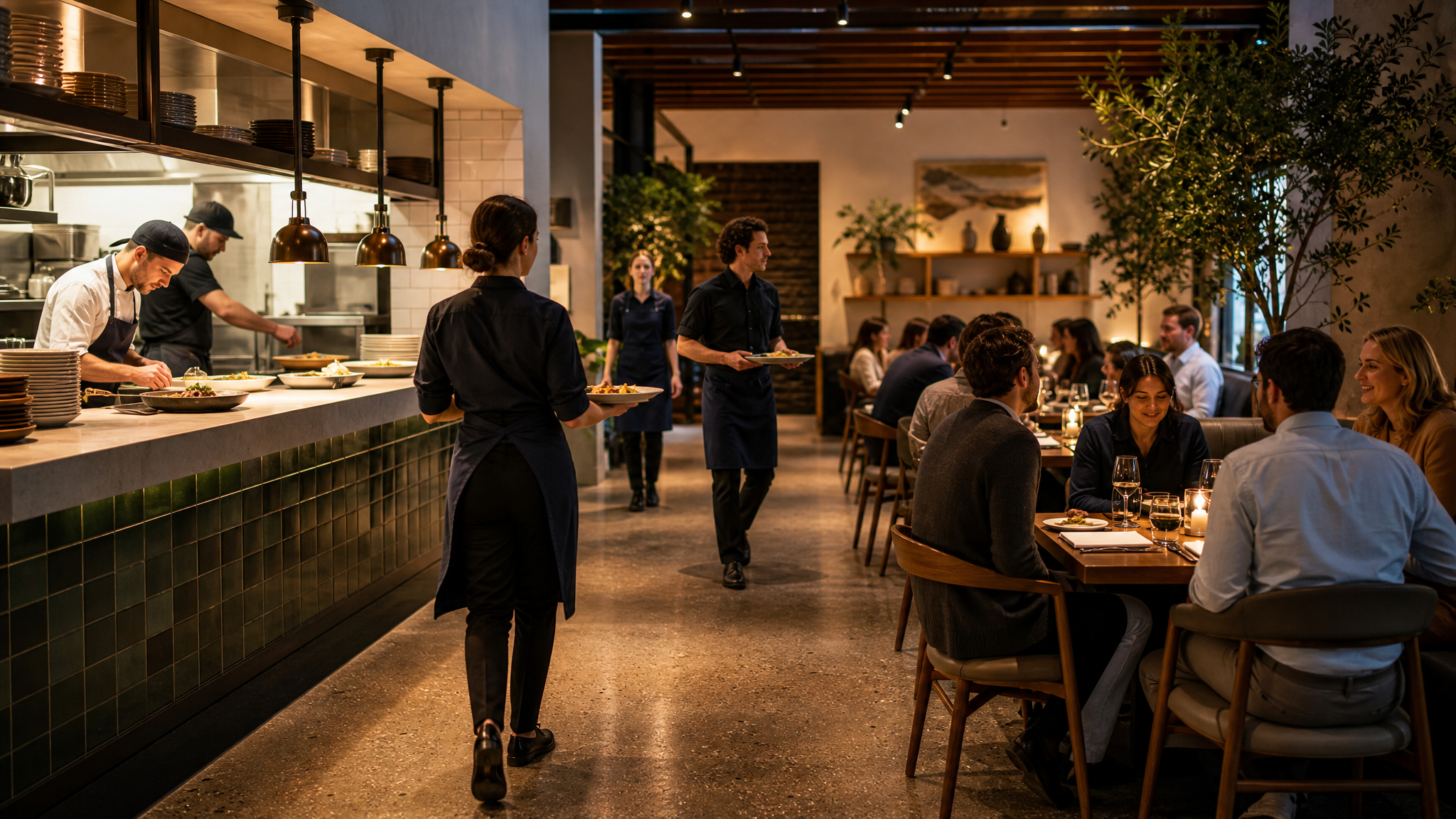
One of the easiest mistakes in scaling is treating operations and identity as separate tracks. In practice, they are tightly linked. Every operational decision should support a familiar guest experience while making it easier for operators and staff to repeatedly execute with consistency.
A floor plan shapes traffic and service flow. Standard procedures affect pace, accuracy, and mood. Menu execution affects trust, because guests notice when a familiar order arrives looking or tasting different.
The brand is not just what guests see. It is what staff can reliably perform under pressure. Good systems protect the signature by making the right version of the experience easier to deliver.
This becomes even clearer when multiple concepts share a space. In those rooms, layout, service logic, and atmosphere all carry brand meaning at the same time.
Hospitality remains a rare differentiator

Many brand assets can be copied quickly. A palette can be imitated. A menu category can be mirrored. An interior style can be approximated with enough budget and enough reference images.
Hospitality is different. It remains one of the few competitive advantages that cannot be duplicated in the same straightforward way. That makes it a core brand asset during expansion, especially when teams focus on visible standards and overlook the human ones.
If hospitality sits at the center of the identity, then training, service behaviors, and staff support are not side issues. They are as brand-critical as materials, lighting, and signage.
Guests usually feel that difference in small moments: the greeting, the response when something goes wrong, the way the atmosphere holds during a rush. Those details rarely appear as hero images in a brand manual, yet they often decide whether the brand feels trustworthy.
Local launch strategy shapes early perception
Expansion is not only about what happens inside the store. It is also about how a new location enters a market. Aggressive and targeted local store marketing at the front end of a store or market opening helps introduce the brand and encourage trial.
That matters because first impressions are rarely neutral. In a new market, people need a reason to notice the brand and a reason to try it. Local marketing creates that opening, but it works best when the on-site experience confirms what the launch promised.
Design teams can help by thinking beyond the permanent identity package. Opening materials, neighborhood-facing messages, and launch visuals should feel connected to the brand while still respecting local context. The goal is recognition without stiffness.
What scaling brands should protect first
When a restaurant grows, some elements can flex and some cannot. The hard part is knowing the difference early. Protecting what matters most means identifying the parts of the experience guests rely on to recognize the brand, then building systems around them.
- Protect the physical cues that establish the brand on arrival, including building design, curb appeal, and layout.
- Protect the repeatable experience by aligning procedures and menu execution with the same guest expectations in every location.
- Protect hospitality as a living asset, not a soft extra.
- Protect launch quality through targeted local store marketing that introduces the brand clearly and encourages trial.
A strong brand does not scale by expanding graphics alone. It scales by making the full guest experience easier to repeat without draining it of character.
The room, the meal, and the service have to agree
The most durable restaurant brands feel coherent because nothing important is arguing with anything else. The exterior signals one kind of place. The floor plan supports that promise. The service style and menu execution confirm it. Guests may never describe this alignment in design language, but they feel it immediately.
That is the real pressure of expansion. Growth asks a brand to appear in more places without losing its center. When identity is built into the room, the operations, and the hospitality, scale stops looking like dilution and starts reading as discipline.
 Icon Template
 Icon Template
 Photo Template
 Logo Template