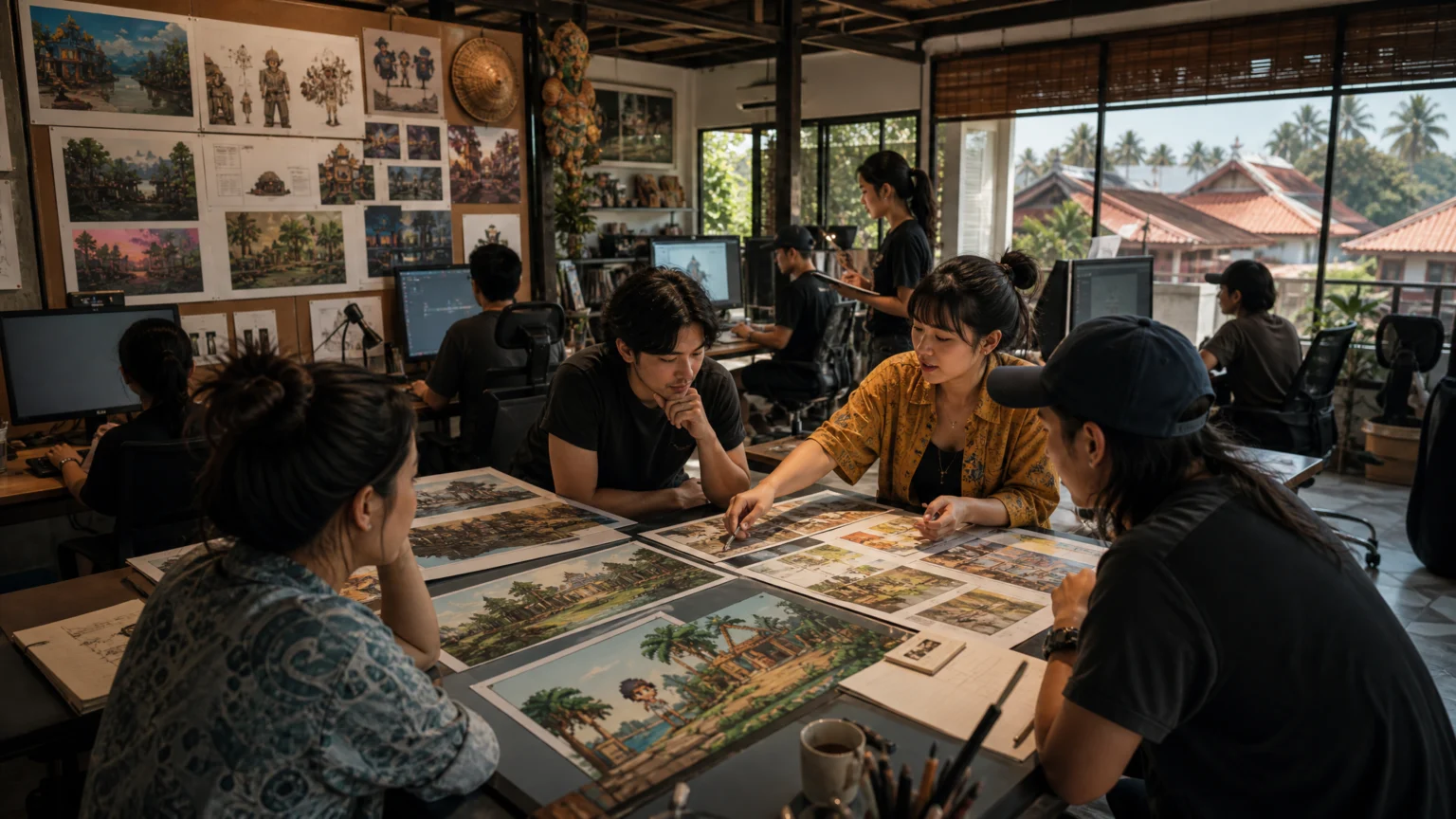
Authorship changes what people notice. For years, work from Southeast Asia could be misread at a distance: plenty of talent, plenty of labor, less visible ownership. That balance is shifting, and the difference shows up on the surface of the work.
When a studio makes its own game instead of helping finish someone else’s, visual choices stop acting as background service. They start carrying identity. Place, texture, humor, dread, and everyday detail move to the front, and the work gains a stronger signature rather than a smaller audience.
From support work to self-definition
Southeast Asia’s game development scene is moving into a different role. Regional studios are going beyond support on global titles and creating games and stories of their own. That is a business shift, but it is also a design shift, because original work asks a studio to decide what it wants to look and feel like.
Once creators own the concept, local references stop reading as incidental. They become structure. A neighborhood mood, a familiar kind of room, a specific emotional cadence, or the pressure of a workday can give a game its form from the inside out.
A showcase can make a pattern visible
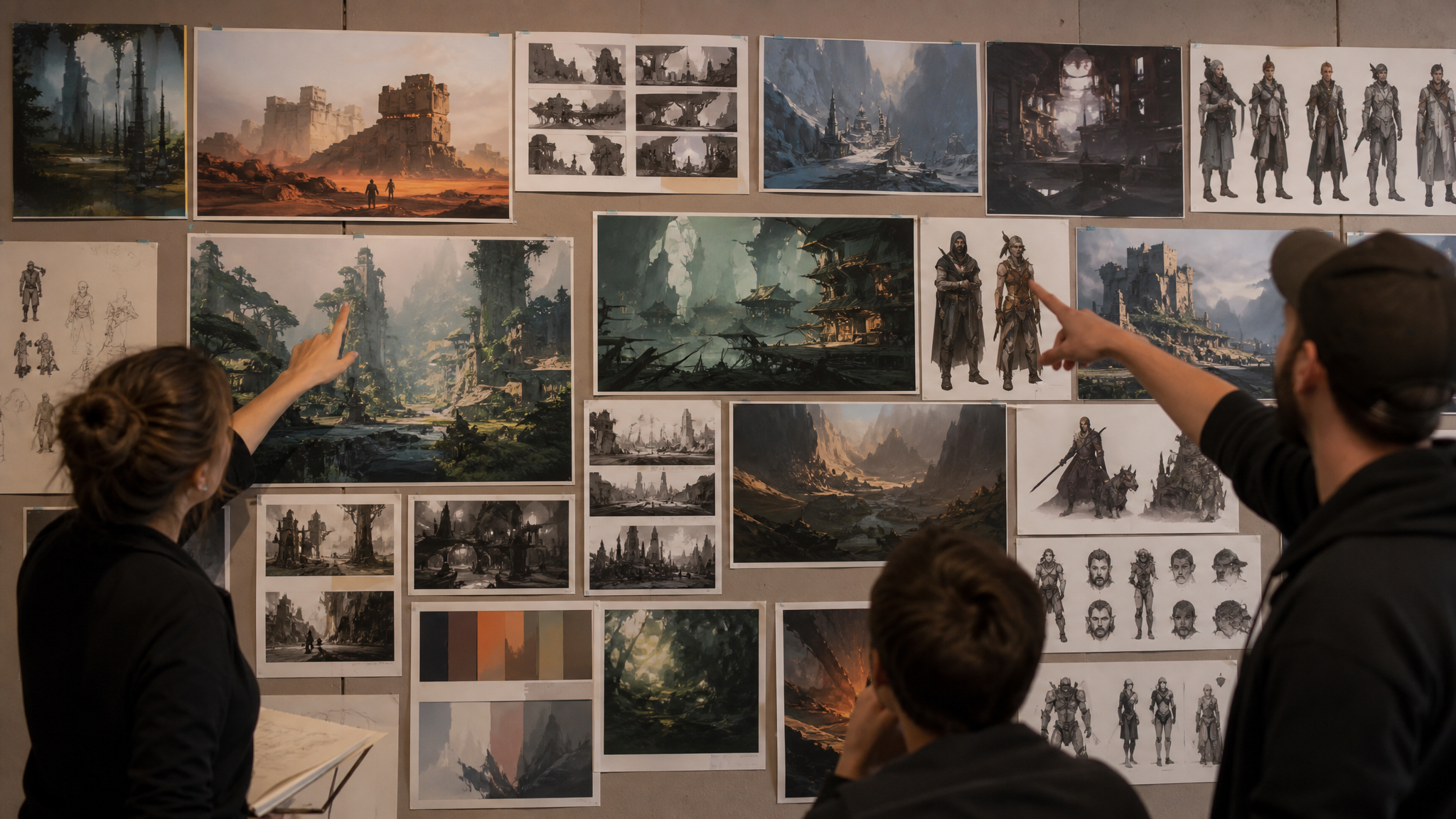
One clear sign of that shift is a regional showcase featuring 36 titles from regional and regional-led teams. That lineup reads as more than a release slate. It suggests a broader cultural and creative movement, with enough range and confidence to present the region as a maker of original worlds rather than a hidden production layer.
Showcases matter because they gather separate efforts into something legible. One title can be waved away as an exception. Dozens of titles create direction. They show density, and density often comes before wider recognition.
For designers, the useful point is context. A visual decision that feels small on its own can feel historic once it appears beside many peers making similarly self-defined choices. One poster is style. A wall of posters starts to look like a movement.
Why local specificity travels
There is a recurring fear in creative work that local detail will limit reach. Southeast Asia’s current games scene suggests the opposite. The more focused and culturally true a story is, the more it can resonate with people around the world.
That logic holds visually. Specificity gives the eye something to hold onto. Generic settings pass by because they carry little weight. A room arranged around familiar habits, a street shaped by actual daily life, or a character carrying recognizable social pressure gives the work texture and timing.
Viewers do not need to share the exact background of the creator. They need the world to feel coherent. When details feel lived-in rather than borrowed, people tend to trust the whole piece more.
The Philippines is becoming harder to overlook
The Philippines is emerging as a significant local game-development hub. At the recently concluded PGDX, about 160 new local titles appeared across mobile and Steam platforms. That number suggests more than scattered ambition. It suggests an ecosystem learning how to sustain itself in public.
Large counts do not guarantee quality, but they do change the visual atmosphere around an industry. They create repetition, comparison, experimentation, and a better chance for creators to define what feels native to their own market. A scene becomes legible when there is enough work to reveal patterns.
That scale also matters for talent development. Once a local field is visible, emerging creators have nearby references for what is possible. They can study peers solving similar problems with similar cultural material instead of looking outward for permission every time.
What culturally grounded work looks like
Specific studios make the shift easier to see. In the Philippines, Polychroma Games’ Until Then is presented as an example of work grounded in familiar local details. That grounding is not decorative garnish. It helps the world earn its emotional weight.
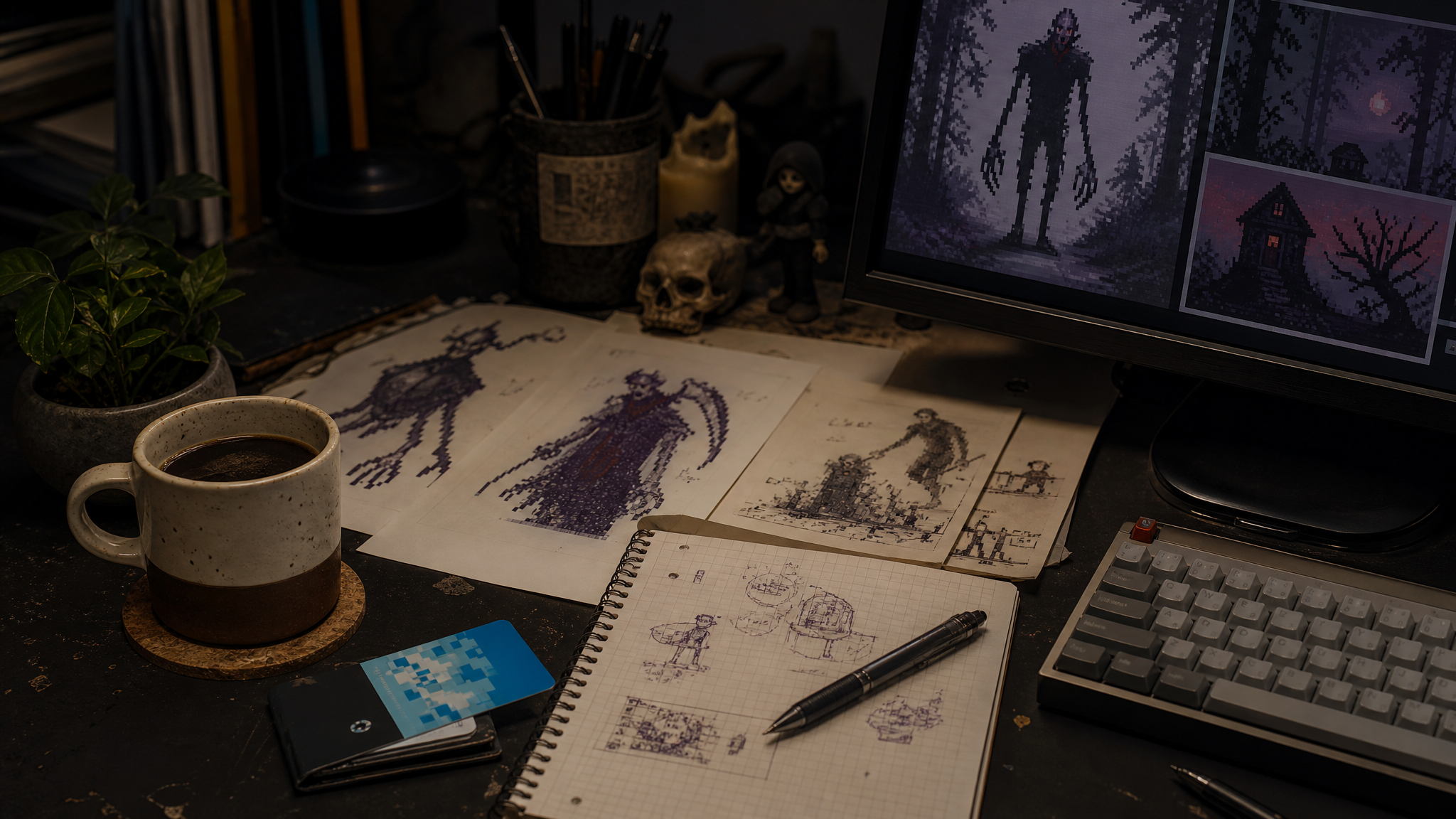
In Indonesia, Mojiken Studio turns the feeling of being stuck in a boring job into the spooky, pixel-art psychological horror of WORK WORK WORK. The idea lands because it begins with an ordinary pressure and pushes it into a stylized performance. Its cultural footing is specific, but the emotional entry point is broad for anyone who has felt trapped by routine.
These examples show that culturally grounded work does not need to explain itself away. It can trust detail, mood, and form. A familiar office dread, a local social texture, or a recognizable domestic setting can carry the emotional architecture of the game.
Detail works best when it carries structure
When local elements are treated as core structure, they shape everything around them: palette, environment, pacing, character expression, even how tension is staged. When they are used as thin flavoring, the work tends to flatten. Audiences can usually feel the difference, even when they cannot name it.
- Specific places give environments weight.
- Specific emotions help a game avoid borrowed tone.
- Specific daily rituals make characters feel observed rather than assembled.
- Specific visual habits help a title stand apart in crowded storefronts and festival lineups.
Global success no longer needs an imported face
Commercial success adds force to the creative argument. Malaysia’s O.P. Neon Games sold more than 3.5 million copies of TCG Card Shop Simulator. That figure matters because it shows worldwide reach from a local studio without requiring the region to hide behind someone else’s identity.
Success at that scale changes perception inside and outside the region. Internally, it makes ambition look realistic. Externally, it weakens the old assumption that global appeal requires a flattened, placeless aesthetic. A studio can come from somewhere specific and still meet a very large audience.
That does not mean every culturally grounded game will become a hit, or that every hit will carry local identity in the same way. It means the old trade-off looks less convincing. Specificity and scale no longer read as opposite poles.
What this shift means for visual identity
As Southeast Asian studios claim more authorship, the region’s gaming identity will likely become more varied, not more uniform. That is usually how real identity works. It is not one look. It is a field of related decisions that share confidence in origin.
Some titles will foreground intimate local detail. Others will translate common anxieties into genre forms such as horror, simulation, or narrative drama. Some will find broad audiences through commercial hooks. Across all of them, the important change is that the region is increasingly setting its own visual terms.
The strongest identities often stop trying to look universal and start trying to look true.
Southeast Asia’s game studios are showing what that looks like in practice: more original creation, more visible local ecosystems, more culturally grounded storytelling, and proof that global audiences are capable of meeting the work on its own terms.
 Logo Template
 Logo Template
 Icon Template
 Logo Template