
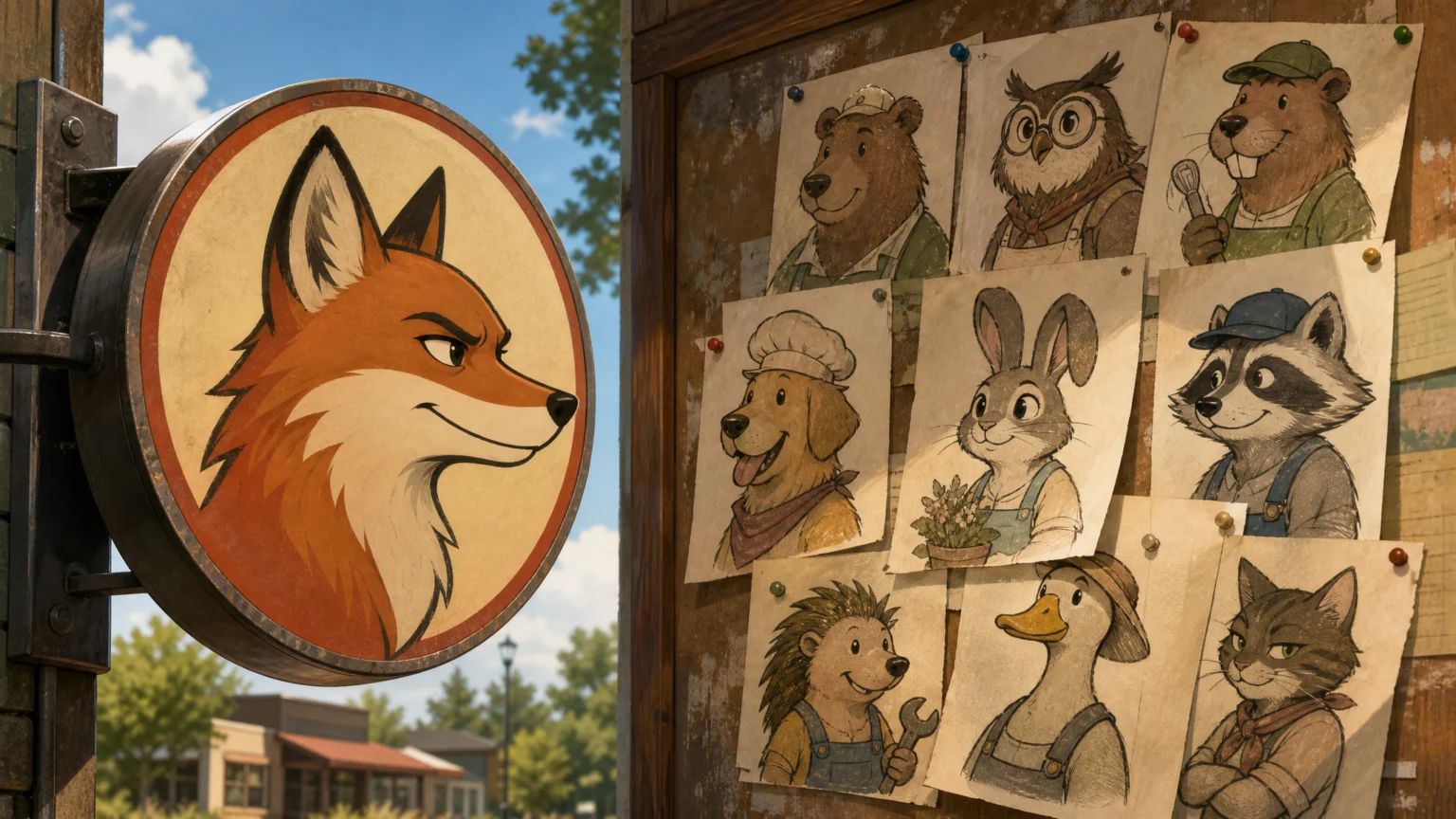
A friendly mascot can do more than decorate a sign. Once a simple animal face moves from roadside recognition into repeated legal conflict, design starts acting like a boundary line.
That tension sits inside the latest dispute over a beaver-shaped logo. A new lawsuit targets Beaver’s Mini Mart in Ohio, and the logo itself is central to the conflict. For designers, the more useful question is not only the trademark issue. It is how a recognizable character mark can gather loyalty, friction, parody, and imitation at the same time.
Why mascot logos attract both attachment and conflict
Mascot logos compress identity into a face, silhouette, and expression. People remember an animal head faster than a paragraph of brand positioning, and they can often sketch it from memory with very little detail. That makes the mark effective on storefronts, packaging, signs, and social posts, while also making resemblance disputes more likely.
When two businesses use closely related animal imagery, the public does not compare legal filings first. People notice shape, color blocks, grin, outline, and direction. If those cues feel too close, a mascot can read less like a signature and more like a claim over visual territory.
This helps explain why logo disputes involving illustrated characters draw so much attention. The design is legible even to people with no interest in trademark law. A mascot turns abstraction into something the public can quickly read.
Repeated enforcement changes the way the logo reads
This conflict does not stand alone. Over the years, more than a dozen companies have faced lawsuits over alleged infringement of the same logo design. That history matters because enforcement is not just a legal pattern. It becomes part of the brand image.
Once a company is known for frequent logo challenges, the public starts reading the mark through that history. The beaver is no longer only cheerful, bold, or familiar. It can begin to signal vigilance, ownership, and corporate reach. That shift can alter the timing of public reaction, especially when the defendant is a smaller local business.
Designers should pay attention to that shift. A logo does not live only in brand guidelines. It also lives in memory, conversation, and the accumulated stories about how the company uses it.
Public parody is a design response
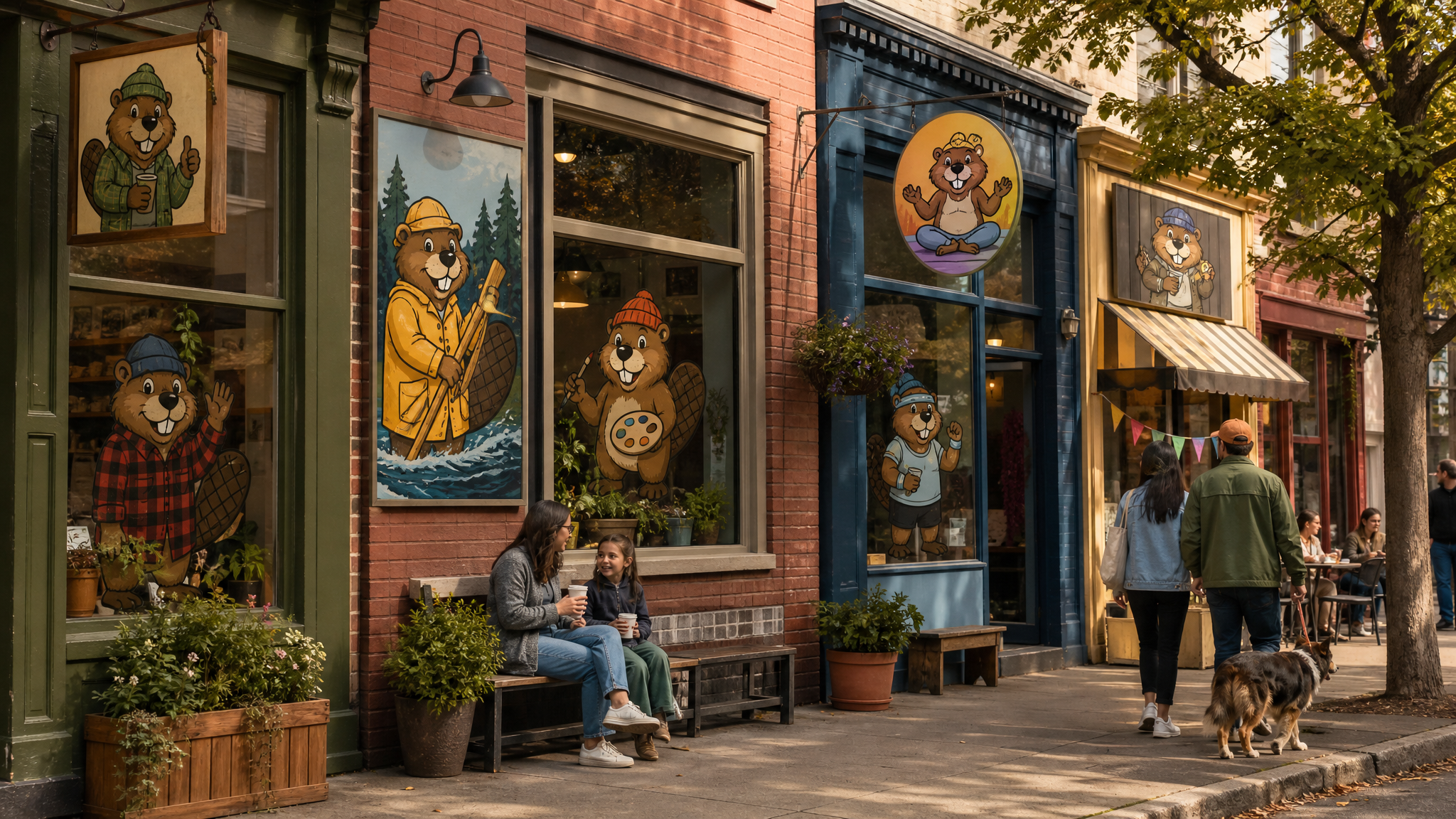
One of the clearest visual effects of the current dispute is the wave of support from other businesses. Dozens of independent stores, cafes, bookshops, and more have adopted temporary beaver-oriented logo designs and mascots in solidarity. That response turns a legal disagreement into a distributed graphic event.
Parody logos travel quickly because they borrow the structure that made the original memorable. They simplify, exaggerate, and redirect recognition. In practical terms, a lawsuit can trigger rapid multiplication of adjacent imagery rather than reduce it.
For brand owners, this is the hard part. Visual control has limits. The stronger and simpler the mark, the easier it is for the public to riff on it. A good mascot gives people something to repeat, and repetition does not always stay loyal.
A memorable logo can protect a brand, but it also gives critics a ready-made template for response.
This is where visual literacy matters. If a mascot is built from broad, familiar forms, the legal case may focus on confusion while the public conversation focuses on resemblance as culture. Those are related questions, but they are not the same question.
What the spoof-logo wave suggests about authorship
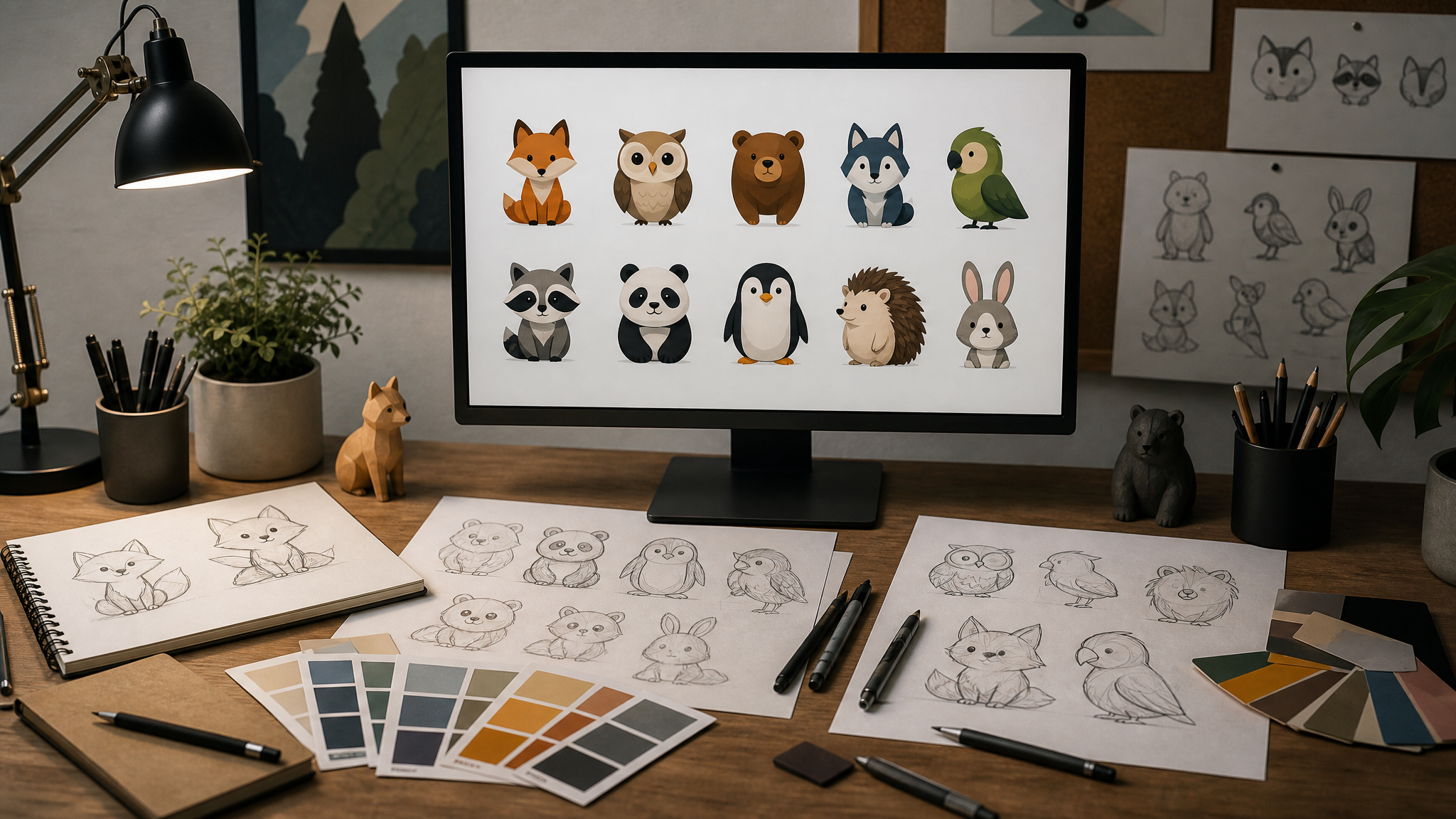
There is another layer in this beaver-logo moment: some local businesses may have used AI image generation instead of hiring a designer to make their spoof marks. That detail changes the design reading. It suggests that visual protest and visual participation now have a much lower production barrier.
That speed has obvious appeal. A café or bookshop can join a public moment quickly, publish an image, and feel part of the chorus. But fast image generation often produces familiar shortcuts: generic expressions, inconsistent geometry, muddy line weight, and mascot energy that feels borrowed. The result may work in the feed and fall apart under closer inspection.
For designers, this creates a practical split. If the goal is immediate commentary, generated visuals can appear quickly enough to catch the moment. If the goal is a lasting identity, speed alone is a poor judge of quality. Character marks need proportion, restraint, and internal logic. Those things still come from judgment.
Why local support gathered around the image
The public reaction has included named voices and organized support, including a quoted post from Rabbit Hole Book and comments from Huber Heights mayor Jeff Gore about an explanation from Buc-ee’s co-founder and CEO Arch Aplin. That mix of civic figures, business owners, and social posting shows how quickly logo disputes move beyond design departments.
What holds the story together is the image itself. A beaver mascot is easy to mimic, easy to recognize, and easy to position as either affectionate homage or pointed resistance. The visual form gives many different groups a common prop.
Design often works this way in public life. A small set of shapes can carry legal meaning, local identity, and social sentiment at the same time. Once that happens, the logo is no longer operating as a sealed corporate asset. It has entered shared visual culture.
Practical lessons for brands using character marks
None of this means mascot logos are a bad choice. It means they require a clearer strategy than many teams expect.
- Build distinctiveness from multiple cues. Do not rely on the animal alone. Use unique proportions, expression, framing, color relationships, and supporting typography.
- Expect imitation at the edges. Highly memorable characters invite lookalikes, jokes, and local adaptations.
- Understand enforcement as brand communication. Legal action may protect rights while also reshaping public perception of the mark.
- Separate quick image production from durable identity design. AI can generate participation, but consistency and authorship still matter when the logo has to last.
Teams thinking about character-based branding can learn a lot from designers who build a stronger visual system around the central mark, rather than asking one symbol to do all the work. Building a distinct visual language gives a logo more support and gives a brand more room to move when one image becomes contested.
The design question is bigger than infringement
The most useful idea in this dispute is not a verdict on any single logo. It is a reminder that recognition has consequences. The clearer the mascot, the more efficiently it moves through commerce, law, and public reaction.
Designers often treat memorability as an uncomplicated good. In practice, memorability brings exposure, imitation, scrutiny, and response. A logo with strong character can set its own rhythm in the market, but it also invites others to answer back.
That is why these disputes keep resonating. They show that a logo is never just a file on a server or a badge on a sign. It is a social object, and once people pick it up, they can admire it, challenge it, or turn it into something else.
 Photo Template
 Logo Template
 Icon Template
 Icon Template