
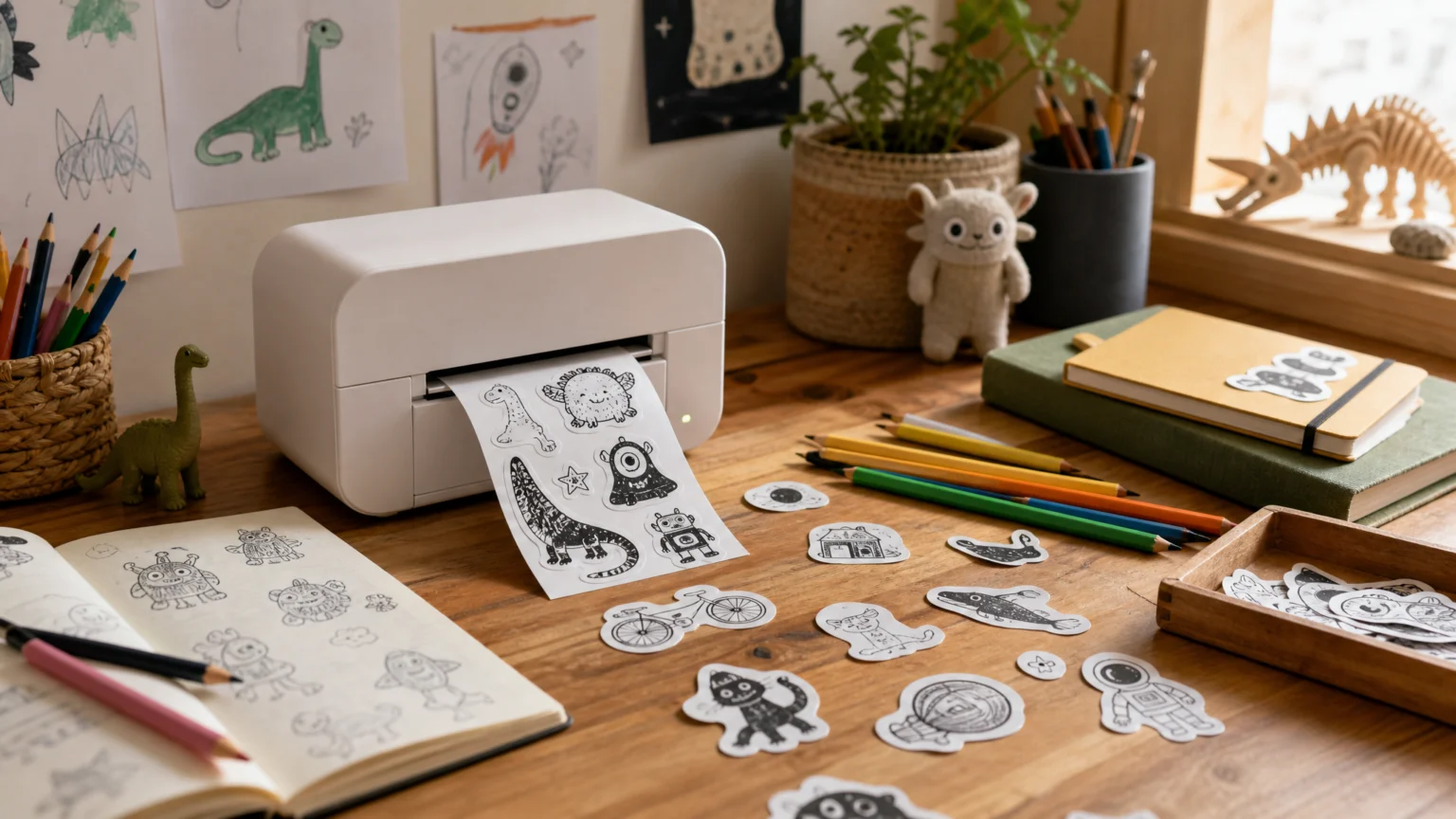
A child says an idea out loud, and a sticker comes back in their hand. That small shift changes the job of the screen. Instead of being the place where creativity ends, it becomes a step in the process.
Spin Master has agreed to acquire Hapiko Inc., a Brooklyn-based creative play technology company. Hapiko is best known for Stickerbox, a child-safe, AI-powered creative tool designed for children. What makes the fit interesting is that the product does not stop at image generation. It carries the idea into real-world play.
From spoken prompt to object
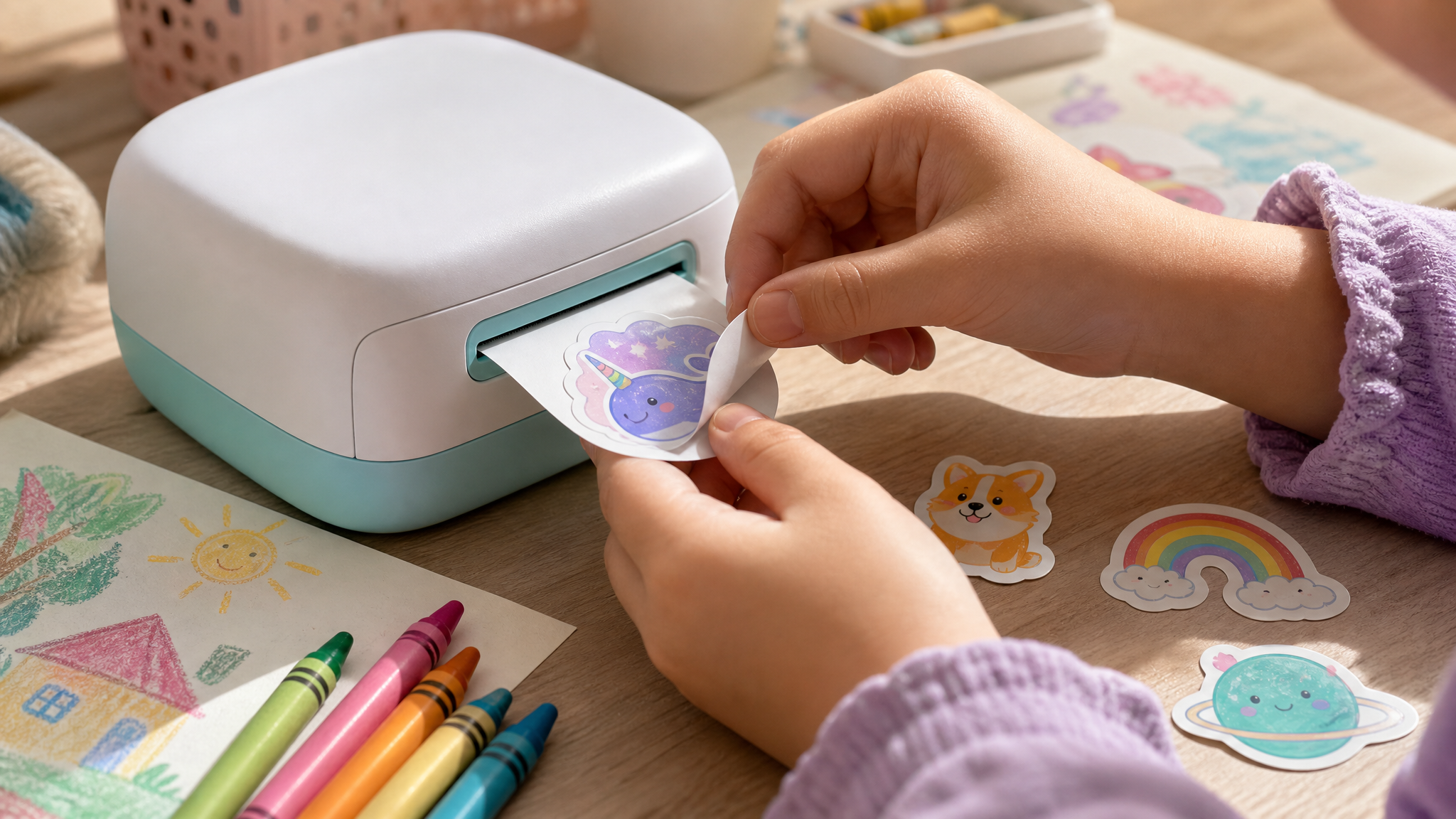
Stickerbox turns children’s spoken ideas into physical stickers that can be coloured, collected, and used by hand. The key design move is not AI on its own. It is the conversion of brief speech into a printed object with edges, surface, and purpose.
That gives the experience a different rhythm from ordinary digital creation tools. A child describes something, the system generates it, the device prints it, and the result can be touched and kept. Each step is easy to follow, and each one leaves something behind.
The product combines voice-to-image generation with ink-free printing technology. That pairing is practical. Voice lowers the barrier to starting, while printing moves the result out of the device and into play.
Why the physical format changes the value
Designers often treat friction as a problem to remove. In children’s creative tools, the better question is where friction belongs. Too much, and the idea stalls. Too little, and the activity can feel light enough to disappear.
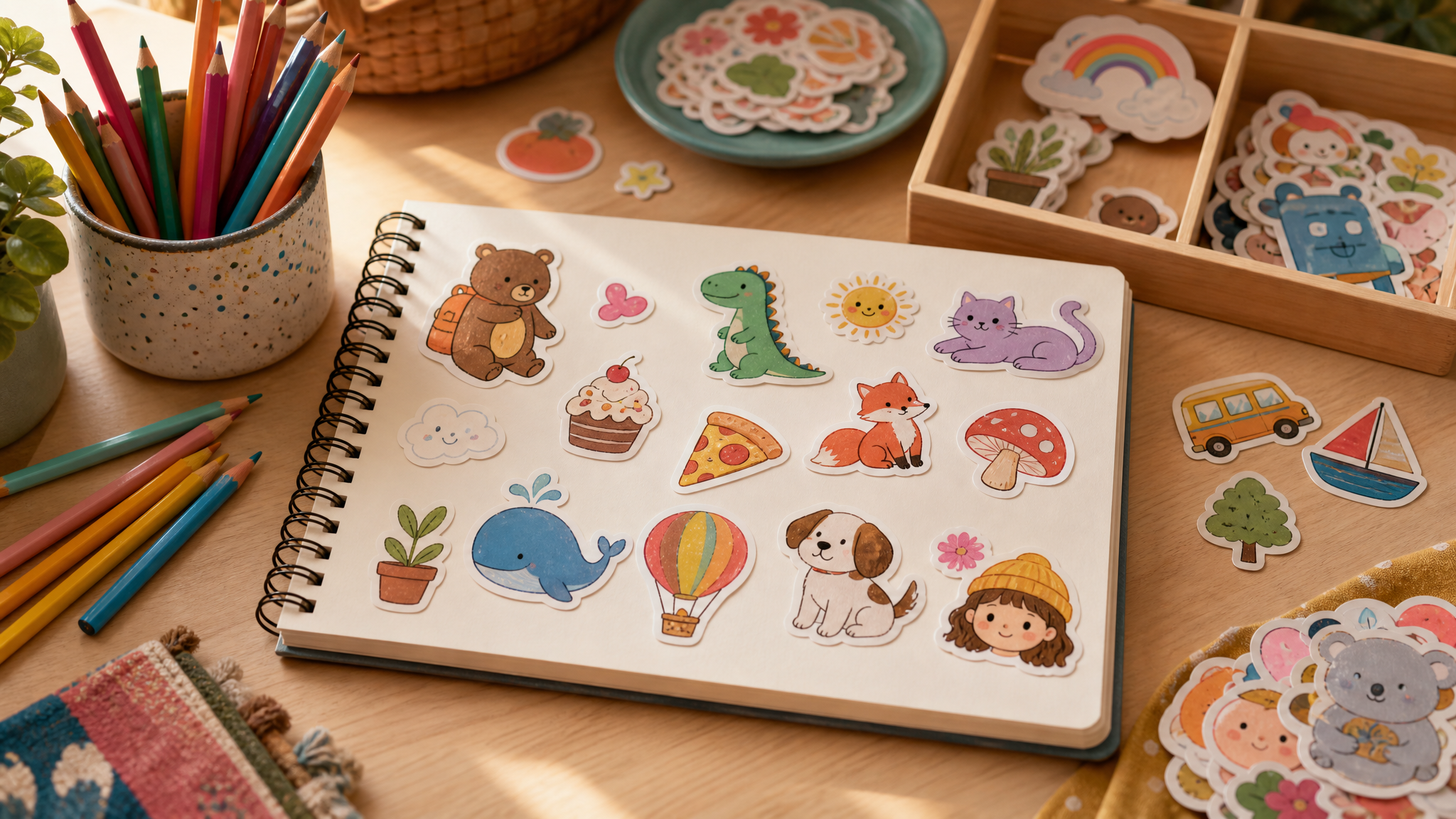
Stickerbox appears to land in a useful middle. Spoken input keeps the first step easy, but the sticker format gives the result a sense of finish. A sticker can be coloured, saved, traded, or placed somewhere, and it picks up meaning as soon as it lands on a notebook, folder, or bedroom surface.
That is why the product reads differently from a generic AI novelty. It treats imagination as something worth materialising. People tend to remember what they can handle, sort, and revisit.
A related principle appears in our look at what a printing museum can teach designers. Print changes attention and makes choices easier to see.
Less passive screen time is a design choice
Stickerbox is framed as encouraging open-ended, tactile creativity while minimising passive screen time. That is more than a reassuring line for parents. It points to a product built around action rather than consumption.
Open-ended play works best when the starting point is clear but the ending stays open. A sticker fits that structure well. It feels complete enough to reward the child, yet unfinished enough to invite colouring, arranging, collecting, and reuse.
There is a quiet confidence in that format. The screen does not need to disappear. It just does not become the whole performance. For brands working around children, education, or family products, that is a useful reminder: sometimes the most important interface decision is deciding where the interface stops.
Safety and privacy shape trust early
Stickerbox is COPPA-compliant and designed with child safety and privacy in mind. For any product involving children and AI, those details are foundational. Parents, retailers, and partners need to understand the boundaries before the creative appeal can do its work.
Visually and structurally, trust is strongest when it is built into the system rather than added later. Products for children make that rule especially clear. Safety affects adoption because it changes how comfortable adults feel bringing a tool into everyday routines.
This is one reason the planned acquisition stands out beyond the toy aisle. It points to value in creative technology with clear guardrails. AI is rarely the whole story. Usability, privacy, and context decide whether a tool feels welcome in a family setting.
That same need for internal clarity appears in a different form in our piece on how AI changes what gets recommended. When systems mediate choices, trust and structure matter as much as visibility.
What the sell-out pattern suggests
Stickerbox reportedly sold out 13 times since late 2025. Without stretching that number into a bigger claim, it still says something useful. Interest has been strong enough to repeatedly outrun supply.
From a design perspective, repeated sell-outs often point to a product people can explain quickly to each other. The concept is easy to picture: say an idea, get a sticker, use it in real life. That kind of clarity gives a product a distinct signature, and it tends to travel well across gift buying, demonstrations, and word of mouth.
It also helps that the result is visible. Physical creative tools have an advantage here because the proof sits on a table. Someone can understand the output without an app tour or a long explanation.
Why this acquisition feels strategically neat
Spin Master is a global children’s entertainment company, and it has entered into a definitive agreement to acquire Hapiko. The appeal is easy to read. Hapiko brings a creative technology product already shaped by child safety, tangible output, and a clear use case.
There is a practical elegance in acquiring a company whose best-known product already resolves several hard problems at once. Stickerbox makes AI legible for children. It translates imagination into something physical. It encourages hands-on creativity while reducing passive viewing. Those parts support one another instead of competing for attention.
For brand and product teams, the broader lesson is straightforward. New technology tends to land better when the benefit is visible, the interaction is short, and the result can move into ordinary life.
What designers can take from it
- Give the idea a body. Digital generation becomes more meaningful when it produces something people can hold, place, or keep.
- Use technology to shorten the path to making. Voice input reduces setup and helps children start from imagination rather than menus.
- Design for activity after the output. Colouring, collecting, and reuse extend the life of a single creative moment.
- Make trust part of the structure. Child safety, privacy, and compliance are central to how a product is judged.
- Keep the concept easy to picture. Products travel farther when one sentence explains both the action and the reward.
That is what makes this deal worth watching. The most compelling part is not the AI language around Stickerbox. It is the timing between voice, image, print, and play. When creative technology leaves the screen at the right moment, it starts to feel less like a demo and more like a habit.
 Photo Template
 Photo Template
 Icon Template
 Icon Template