Warm lights and family scenes still dominate festive advertising, but they rarely carry enough weight on their own. The more memorable Diwali work starts earlier, with a structural choice about setting, language, creators, or channel. In these campaigns, format is not a container for the message. It is part of the message.
That distinction matters during a major cultural festival, when many brands reach for the same emotional cues. Sameness arrives quickly. The work that holds attention usually makes a more exact decision about how the story appears and where people meet it.
Across recent examples, that precision shows up in different forms: a live-event setting, invention-led storytelling, a creator mix, and a storefront built into quick commerce. The common thread is simple. Each brand adjusts the format to fit its cultural intent.
Specific settings carry more than festive decoration
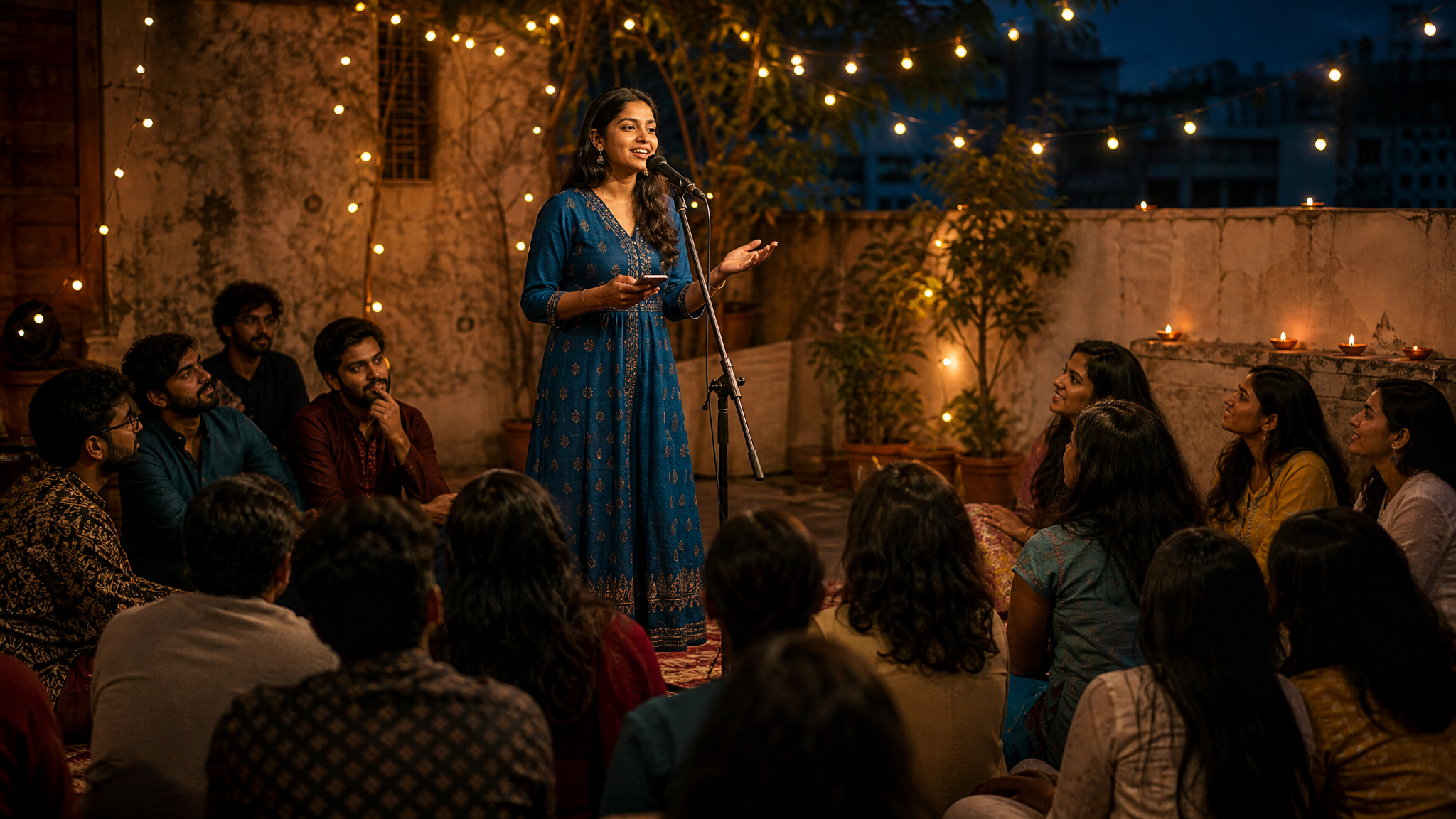
South Indian Bank built its Diwali film around a Diwali Open Mic event. That choice immediately changes the visual logic. Instead of a generic festival tableau, the brand works inside a social space that already has audience, anticipation, and exchange.
The execution stays just as concrete. The film was released in Hindi, Kannada, Telugu, Tamil and Marathi, and it was produced by Prakkat Films, scripted by Sarat Prakash, directed by Martin Prakkat, and features music composed by Shivahari Varma.
Those details are not side notes. The multilingual rollout is part of the campaign signature, because it shapes how the work travels without flattening the setting that gives it character. The response suggests that balance landed at scale: the film garnered over 2 crore views within 48 hours.
For designers and marketers, the useful lesson is visual. Cultural specificity often comes through scene design, not decorative excess. A well-chosen environment gives direction to casting, sound, copy, and edit decisions before any festive motif enters the frame.
Concrete inventions give warmth a visible form
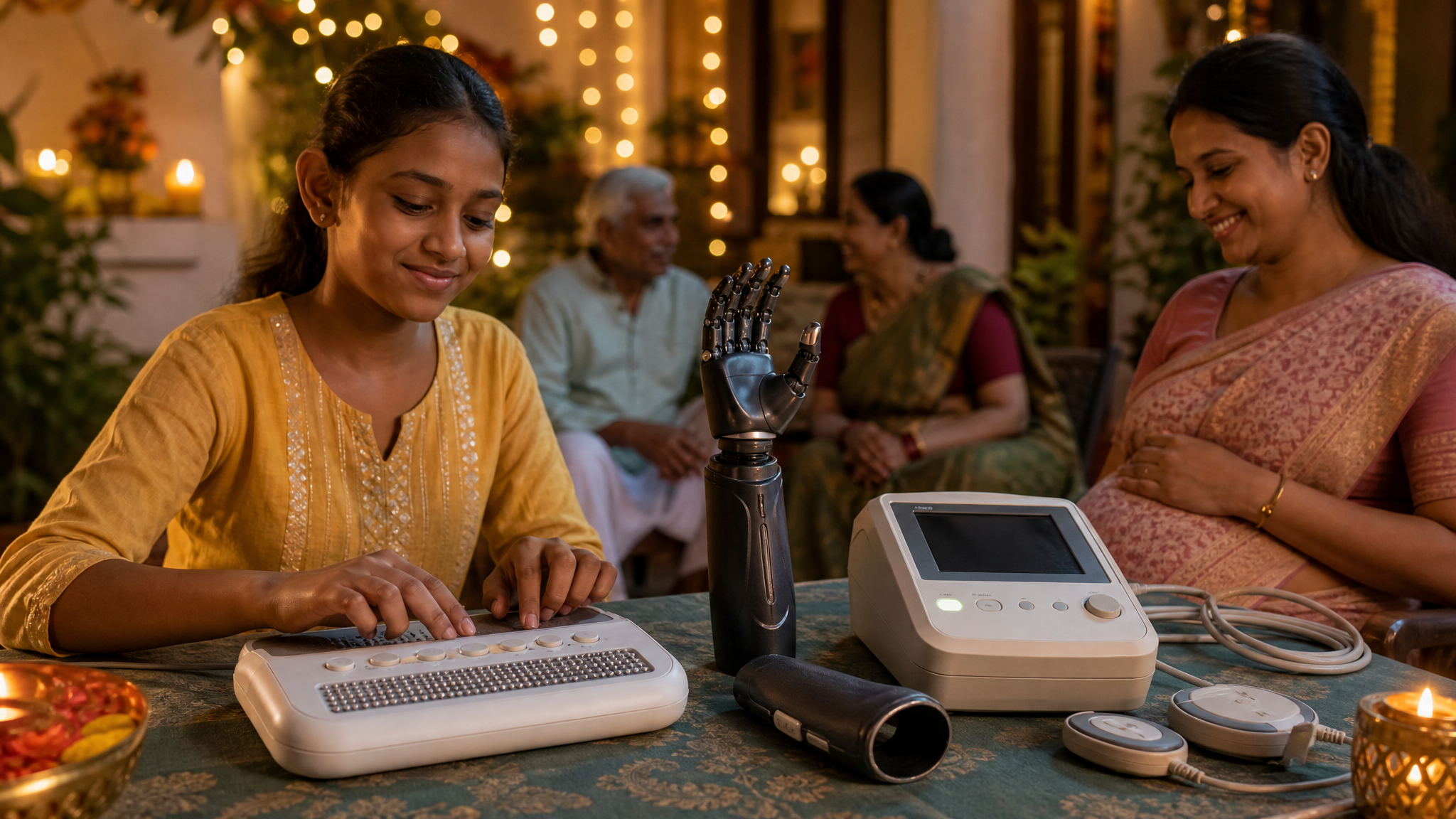
HP took a different route with Lights of Change. The campaign celebrates six Indian innovations using technology to address everyday challenges, which keeps the work grounded in use rather than spectacle.
The examples are tangible: a self-learning Braille device, an affordable bionic arm, and CareMother’s fetal heartbeat monitoring solution. Each one gives the campaign a physical focal point, something a viewer can picture later while the larger idea about care, access, and ingenuity stays intact.
That is why the social-impact storytelling feels persuasive rather than vague. The campaign does not use the festival as a soft emotional backdrop. It connects light with practical change, so meaning arrives through function.
Brands trying to communicate purpose can take something direct from this approach. Abstract virtue is difficult to picture, while a device, a hand, a monitor, or a repeated daily action gives the eye something to hold. Motion assets can support that clarity in short digital formats too, especially where explainers or product cues need to stay legible across social placements, as discussed in how AI video editing works for on-brand content.
Creator combinations shape tone before the story starts
Haldiram’s approached the season with a digital-first strategy. The campaign features Bollywood and regional actors, television personalities, comedians, digital creators, and an AI creator, including AI creator Sardar Jappu Singh.
That mix works as more than a list of faces. It changes the tone of the communication before any message begins, because each creator type brings different audience expectations, timing, and visual habits. A comedian frames attention one way. A television personality frames it another. An AI creator introduces a separate layer of experimentation.
The result is a broader communication system rather than one festive master film asked to do every job. That range helps the brand look contemporary without forcing novelty into the center of the performance.
There is a practical production side to this too. Creator-heavy campaigns need repeatable visual rules across many formats, which is close to the brand-control challenge explored in branded social media templates.
Channel design now shapes festive identity
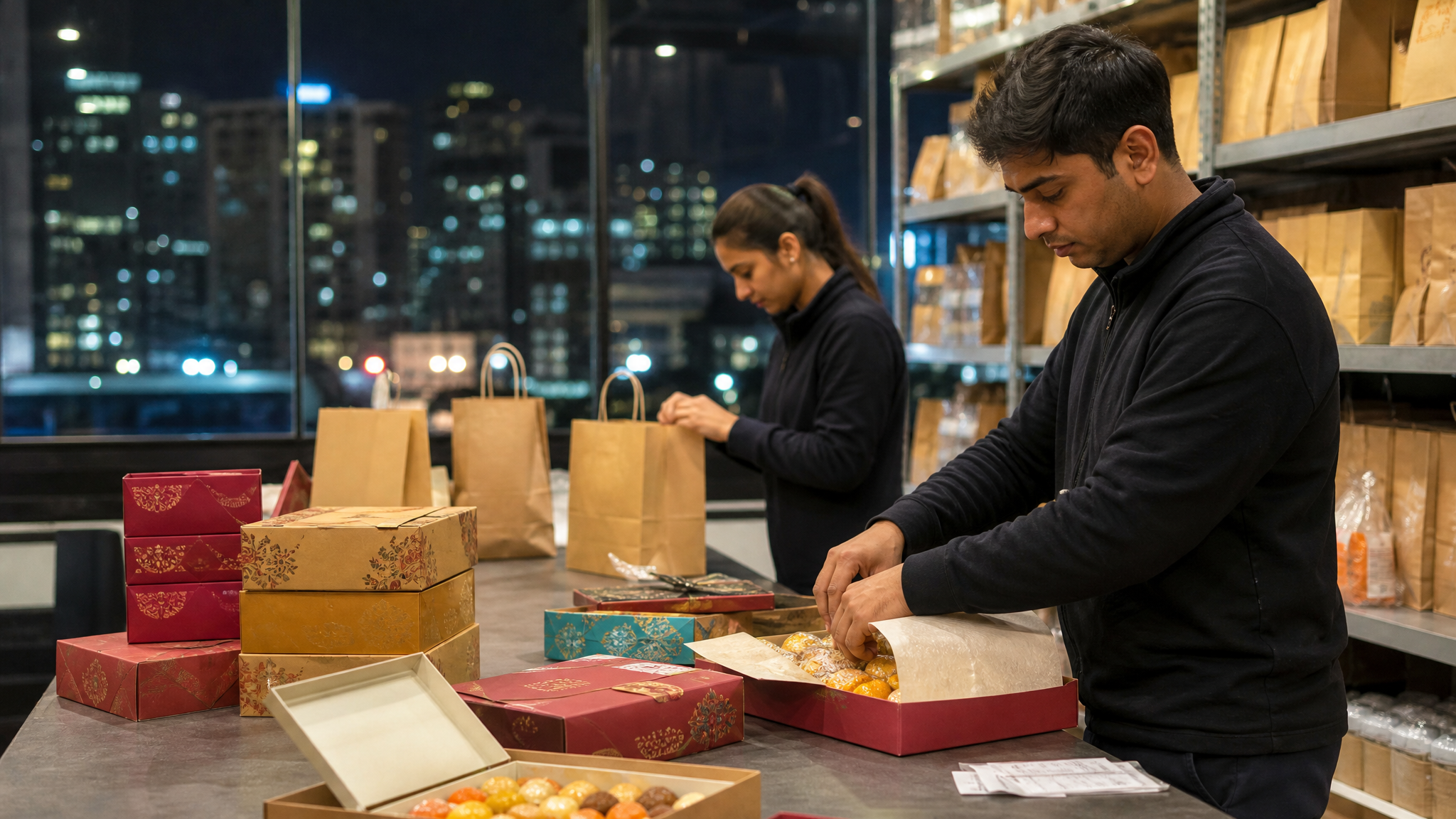
Haldiram’s also shows how distribution has become part of brand expression. The campaign extends to quick commerce through partnerships with Blinkit and Zepto, and it includes a dedicated Haldiram’s House of Sweets storefront on Blinkit.
That storefront matters because it turns access into part of the experience. The brand is not just advertising celebration; it is shaping the route to purchase inside a platform where speed and visibility matter.
The support system around that push is broad: print and outdoor advertising across western and southern India, as well as select locations in Delhi. This creates a layered rhythm across channels. Digital-first does not mean digital-only. It means digital leads while other formats reinforce recall in specific geographies.
For designers, the implication is immediate. A festive campaign now has to hold its face across storefront tiles, outdoor surfaces, print layouts, creator videos, and social snippets. When motion elements need to adapt across those placements, a focused toolset like animated logos for social media can help preserve recognition without making the visual system heavier than it needs to be.
Younger financial audiences expect contextual relevance
Angel One appears in this wider pattern through audience focus. People aged 18–34 accounted for 22.6 per cent of direct SIP assets under management as of March 2025, based on the AMFI-Crisil Intelligence Factbook 2025.
That figure helps explain why festive communication is shifting in tone and channel. A younger financial audience is unlikely to respond to ritual alone. It expects contextual messaging, digital fluency, and a reason the brand belongs in the season.
This does not make festive branding colder. It simply raises the bar for relevance. The emotional layer works better when it is attached to a use case, a creator voice, a meaningful setting, or a visible service path.
Strong festive work behaves like a system
The strongest pattern across these examples is not one visual style. It is an operational choice to make the brand more exact. South Indian Bank uses a tightly defined setting and multilingual rollout. HP uses invention-led storytelling grounded in everyday challenges. Haldiram’s combines creator variety, AI-assisted communication, quick-commerce distribution, and regional outdoor support.
Each approach answers the same pressure in a different way: how to show up during a major cultural festival without dissolving into the seasonal blur. Louder is not the answer. Sharper choices are.
- Is the setting specific enough to create memory on its own?
- Are language choices part of the idea rather than an afterthought?
- Does the story show a concrete object, service, or action people can picture later?
- Do creators open distinct audience entry points rather than add celebrity weight alone?
- Are channels doing different jobs instead of repeating the same asset everywhere?
When those answers are clear, festive branding feels less like a greeting and more like a designed system. That is why these campaigns register. They do not treat celebration as a ready-made backdrop. They make deliberate choices about where meaning appears and how the brand enters the moment.
 Icon Template
 Icon Template
 Icon Template
 Photo Template