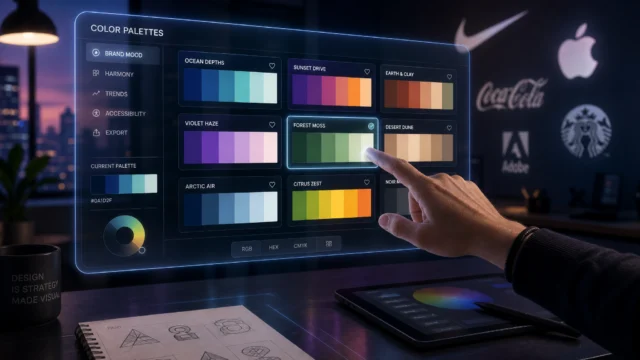

A polished campaign can still look complete and still arrive a beat late. The harder task now is not producing one strong message. It is building a brand presence that can answer the room while the room is still talking.
That pressure became clearer as attention moved toward TikTok, where audiences tend to reward content that feels native to creators rather than imported from an advertising department. In that setting, the old campaign pattern of scheduled, one-directional bursts gives way to sustained, reactive, two-way engagement. For designers and brand teams, that is not a minor channel adjustment. It changes the brief.
When attention shifts, format follows
Campaign thinking depends on planning, approvals, launch windows, and a finished set of assets. Conversation-led brand work asks for different tools: a recognizable voice, a visual system that flexes quickly, and a team that can publish in the same timing as the platform.
TikTok puts pressure on surfaces that used to feel secondary. Tone matters more. Character matters more. Reaction speed matters more. A brand no longer performs best by repeating a polished line at fixed intervals; it works harder when it can participate in memes, respond to cultural moments, and still remain legible as itself.
This connects closely to social listening before launch. Attention is easier to earn when the brand studies the room instead of speaking over it. On conversational platforms, that habit does not stop before release. It becomes part of daily production.
Duolingo turned its mascot into a social actor
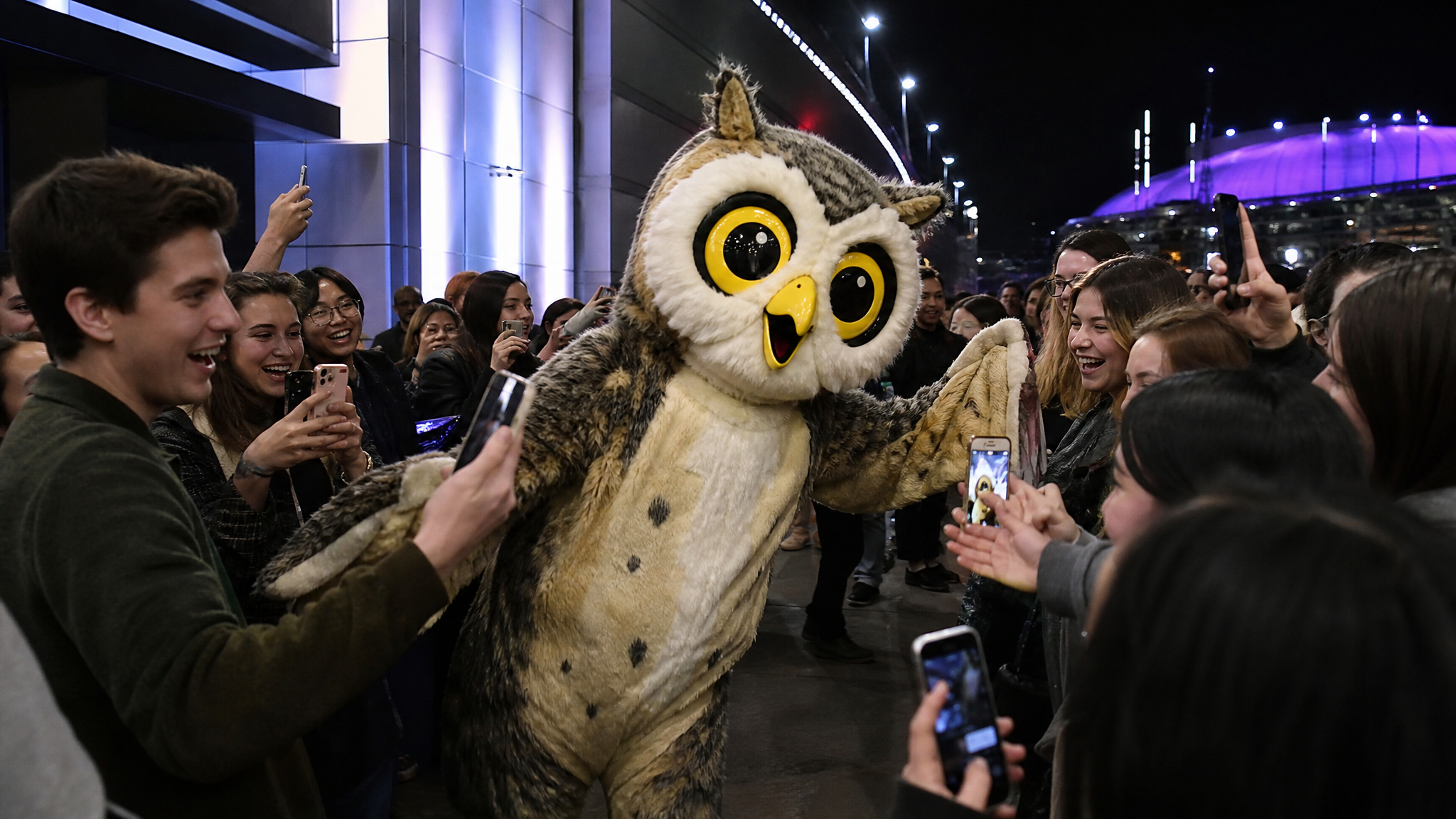
Duolingo is a useful case because the execution stayed tightly tied to the brand. Its TikTok strategy centered on Duo, the owl mascot, under social media manager Zaria Parvez. That choice gave the brand a ready-made figure who could appear, react, joke, and occupy scenes in ways a static logo or formal spokesperson could not.
Duo appeared at a Doja Cat concert, a Charli XCX concert, and the Barbie film premiere. Those appearances matter because they show how conversation-led branding often works through cultural adjacency rather than direct product explanation. The mascot becomes a social actor. The brand gains a visible signature that can travel across moments without restating its purpose every time.
For a design team, this kind of work depends on a character system that survives repetition. A mascot needs consistent proportions, expressions, poses, and behavioral boundaries. If those pieces are loose, the account starts to feel improvised in the wrong way. If they are clear, the brand can move quickly without looking off-model.
Scale is visible, causality is not settled
Duolingo’s business and audience numbers show that the brand operates at meaningful scale. It has more than 500 million cumulative downloads and approximately 40 million monthly active users. Revenue reached $531.1 million in 2023 and $748.0 million for the full year 2024. TikTok followers reached 16.8 million by April 2025.
Those figures explain why the example keeps drawing attention. They show a large audience, a large business, and a social account with unusual reach. Still, the careful reading is the accurate one: there is no verified public information quantifying a direct, audited causal link between the TikTok content strategy specifically and Duolingo’s daily active users, monthly active users, or revenue growth.
That restraint matters. Brand teams often want a straight line from a social idea to a revenue chart, but creative work rarely behaves that neatly. The more practical view is that platform-native content can strengthen attention, memorability, and earned media while sitting inside a wider business system.
Reactive content still needs structure

Fast social content can look casual from the outside. In practice, speed needs structure. Quick posts still pass through legal review and internal standards channels, which means the most responsive brands are usually the ones that prepared the lane in advance.
That preparation is often invisible design work. Teams need approved character rules, tone boundaries, escalation paths, and simple review flows. A brand that wants to join a meme by afternoon cannot rely on the same production stack built for a six-week campaign. The operating system has to change along with the output.
This is one reason identity systems now need more than static marks and color palettes. They need behavioral rules. The same pressure appears in fan-first social media design, where the brand earns trust by acting consistently in public, not by unveiling a polished look and hoping it carries the rest.
Visual systems need room to react
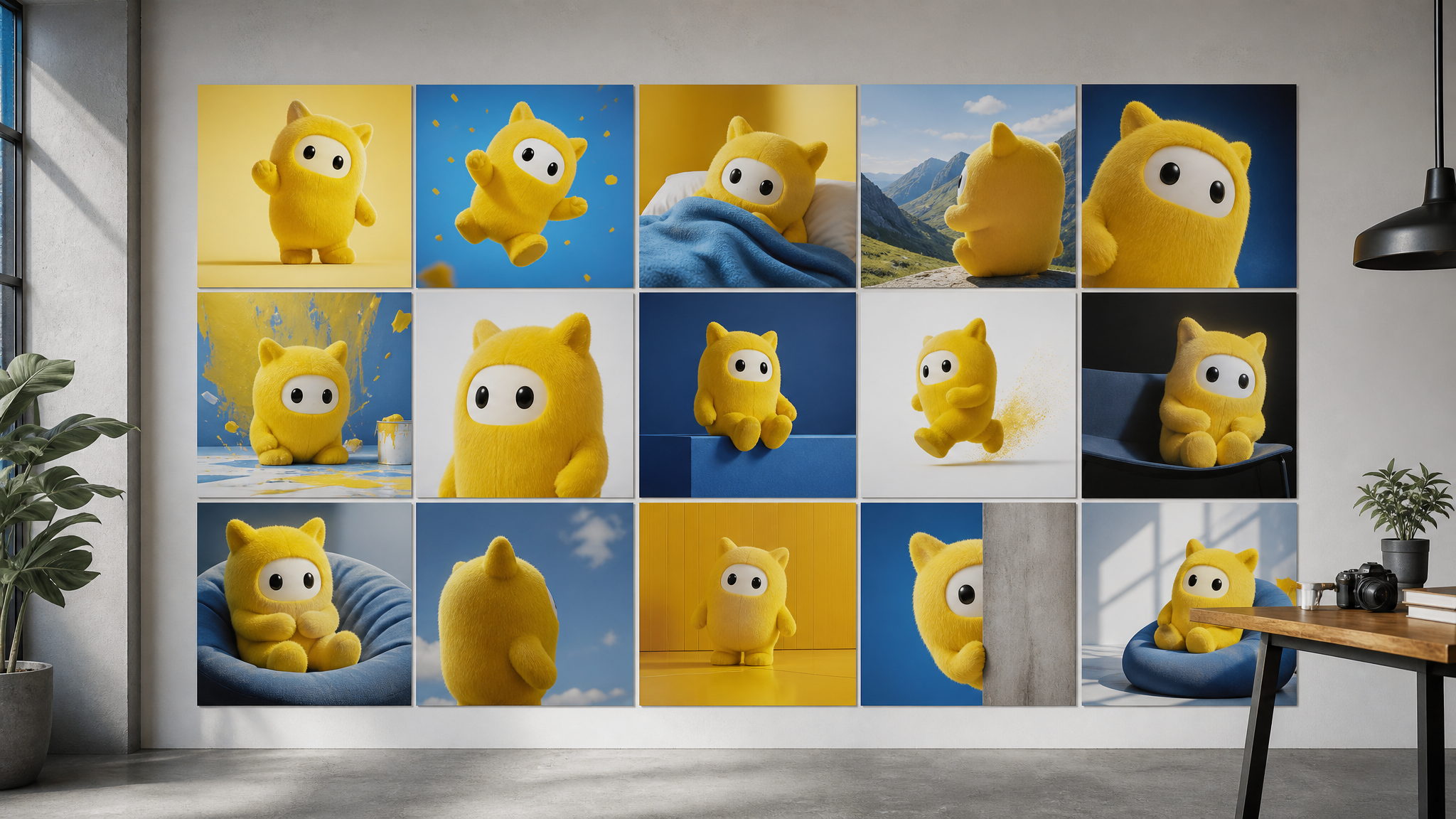
When brand communication becomes conversational, the visual system has to support variation without losing direction. Templates cannot be so rigid that every post feels delayed, and they cannot be so loose that the account loses recognition from one week to the next.
That usually means identifying the cues that matter most and protecting those first. In Duolingo’s case, the mascot does much of that work. In other brands, it might be a recurring framing device, a style of captioning, a reliable camera distance, a color block, or a repeatable editing cadence. The point is not to standardize every post. The point is to keep a few elements unmistakable while the surrounding content stays responsive.
For teams making assets in volume, motion can help here. A short repeatable intro, a consistent reveal, or a restrained loop can give reactive content a stable edge without making it feel overproduced. Specific tools like animated logos for social media or reusable logo animation templates are most useful when they support consistency quietly rather than calling attention to themselves.
Presence now matters as much as polish
Meme participation and creator-style tone work because they change the relationship between brand and audience. The brand stops appearing only when it has bought a slot. It starts showing up as a participant in the feed.
That does not mean every brand should copy mascot humor or chase every trend. It means the most effective presence is often the one that understands the customs of the platform and enters them in character. The design question becomes less about making a campaign look expensive and more about making a brand feel present, recognizable, and timely.
There is discipline in that constraint. If a brand can only function through heavy production, long approvals, and fixed scripts, it will struggle where attention moves quickly. If it has a strong character system, a clear voice, and governance that supports rapid decisions, conversation becomes a workable medium rather than a risk to avoid.
The brief now includes continuity
The central change is simple to describe and difficult to organize: many brands are moving from campaigns to conversations. That asks creative teams to design for continuity instead of isolated peaks. The work is less about one perfect message and more about maintaining recognition across many small moments.
Duolingo makes that shift easy to see because the mascot, the tone, the cultural appearances, and the account scale all sit in public view. The lesson is not that every brand needs an owl. It is that platform-native communication works best when the brand has something durable enough to react with, and a system disciplined enough to keep that reaction coherent.
The brief is not smaller than the campaign brief. It is wider. It includes voice, governance, character design, cultural timing, and visual consistency across continuous exchange. That is a different kind of brand craft, and it rewards teams that can build for presence, not just release day.
 Logo Template
 Photo Template
 Photo Template
 Logo Template