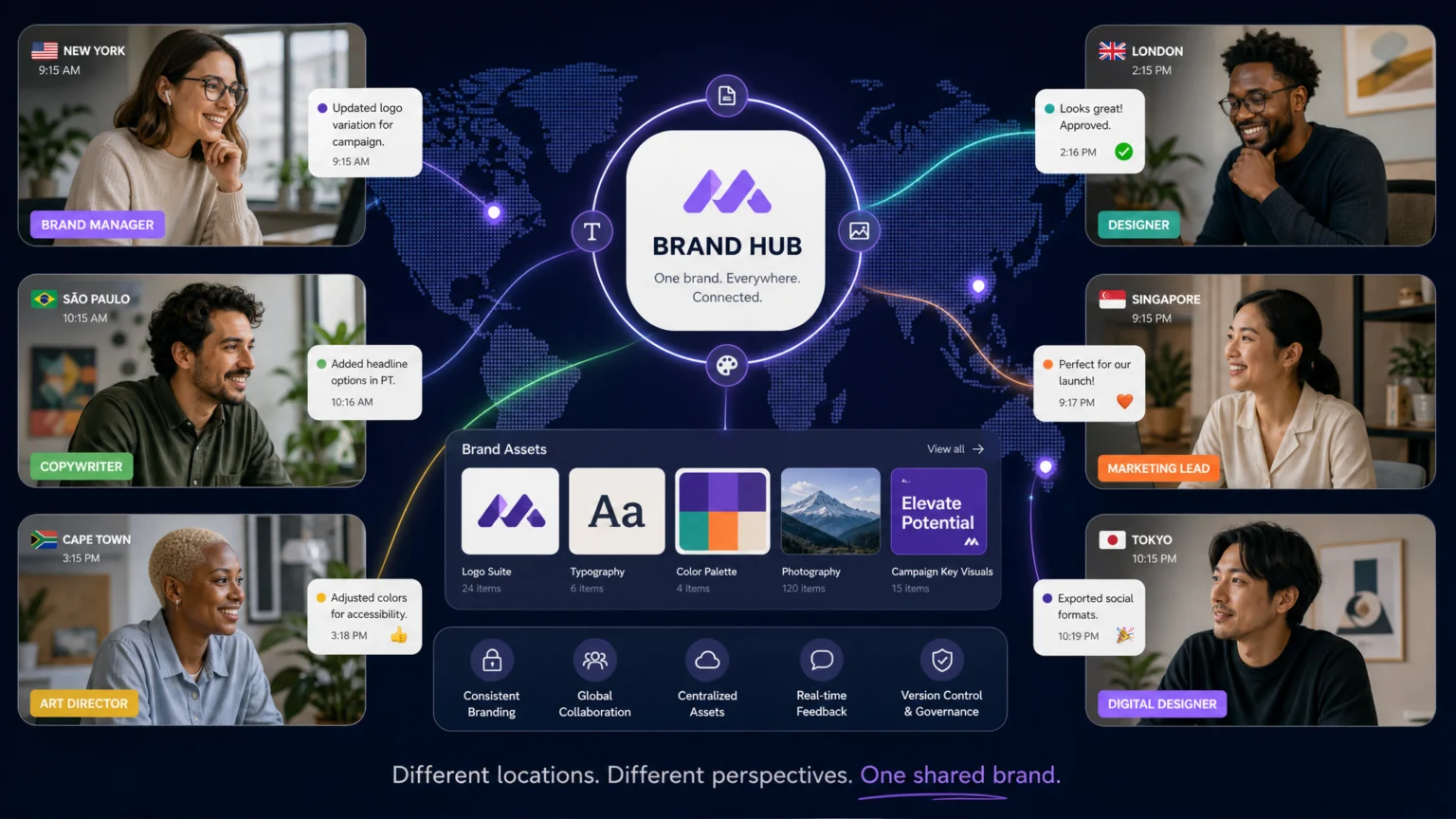
A global product launch can quickly unravel if regional marketing teams use inconsistent brand assets. Imagine one team deploying an outdated logo, another stretching an image beyond recognition, and a third using an unapproved font. This isn’t just a minor visual discrepancy; it’s a fragmented brand identity that erodes customer trust and dilutes recognition. Such scenarios are common for international organizations grappling with how to ensure every team, everywhere, consistently represents the brand.
The root of this inconsistency often lies in a decentralized approach to managing creative assets. Without a unified system, designers and marketers often resort to local folders, email attachments, or ad-hoc cloud solutions. This leads to a proliferation of unapproved or outdated materials, making it nearly impossible to maintain a cohesive brand presence across diverse markets. The result is a weakened brand impact. A structured workflow is essential to bridge this gap, ensuring every customer touchpoint reinforces a singular, strong brand message.
Centralize Assets for Universal Access
The foundation of global brand consistency is a single, easily accessible repository for all approved assets. This central database ensures that every team member, regardless of their location, can access the most current and officially sanctioned materials. The effectiveness of this repository relies heavily on its intuitive organization, mirroring how teams naturally search for and utilize assets.
To optimize this centralization, organize assets logically using clear, descriptive categories. Instead of broad, generic folders like ‘Marketing Assets,’ create specific directories. Consider structures such as ‘Q4 Holiday Campaign/Social Media/Images,’ ‘Product Launch X/Website Banners,’ or ‘Brand Guidelines/Logos/Primary.’ This granular approach significantly reduces search time and minimizes the risk of using incorrect or outdated assets. Canto’s glossary emphasizes that optimal asset organization should align with how teams actually search, using criteria like campaign, channel, asset type, or product line. A well-structured system allows teams to quickly locate what they need, whether it’s a specific product shot for an e-commerce page or a localized banner for a social media campaign, without sifting through irrelevant files.
Implement Robust Version Control and Permissions
Once assets are centralized, managing their evolution and controlling access becomes paramount. Robust version control ensures that only the latest, approved iterations of assets are available for use, actively preventing the accidental deployment of outdated materials. This is especially crucial for core brand elements like logos, brand guidelines, and key campaign visuals, which frequently undergo updates and refinements. Without proper version control, regional teams might inadvertently use an older logo version or a campaign visual that has since been retired, leading to brand inconsistencies.
Alongside version control, role-based permissions are indispensable. These controls restrict access to assets based on a user’s specific role, ensuring that only authorized personnel can view, edit, or distribute particular brand materials. For example, a local marketing coordinator might have permissions to download approved campaign images, while a brand manager retains editing rights for core brand elements. This tiered access prevents unauthorized modifications, safeguards asset integrity, and ensures compliance with brand standards. Smartsheet’s guide highlights the necessity of a central, up-to-date asset database that supports accessibility for all approved users. Implementing a clear permission structure also streamlines the approval process, as only designated individuals can finalize and publish assets, reducing bottlenecks and errors.
Embed Brand Guidelines Contextually
Brand guidelines are often treated as separate documents, residing in a different folder or even an entirely separate system from the assets they govern. This separation creates a significant disconnect, forcing users to toggle between resources and substantially increasing the likelihood of misinterpretation or oversight. For true global consistency, integrate guidelines directly with the assets themselves, making compliance an inherent part of the workflow.
When guidelines are embedded, users can immediately understand the proper usage, placement, and context for each asset. This integration might involve attaching usage notes directly to image files, linking to specific sections of a comprehensive brand manual from within an asset’s metadata, or creating interactive guidelines directly within the asset management system. This contextual approach makes adherence intuitive, drastically reducing errors and ensuring that the brand narrative remains consistent and impactful across diverse applications and regional adaptations. Marq’s blog on brand asset management for growing teams underscores the value of making guidelines easily accessible alongside assets. For instance, a designer downloading a logo could instantly see its minimum size requirements, exclusion zone, and approved color variations, preventing common misuse.
Establish Localization Guardrails and Review Processes
Global teams require a degree of flexibility for localization while strictly adhering to core brand principles. Localization guardrails define the precise boundaries within which regional teams can adapt assets for local markets. This includes clear directives for translation, cultural adaptation of imagery, and regional-specific messaging. The overarching goal is to allow for cultural relevance and resonance without compromising the fundamental brand identity or diluting its core message. For example, a global campaign might feature a core visual, but regional teams could swap out models or background elements to better reflect local demographics, provided these changes are reviewed against the established guardrails and approved by the central team.
A structured review process for localized assets is equally critical. This involves designated brand approvers, typically from a central brand team, who meticulously review localized versions before their deployment. This helps ensure that all adaptations align with established brand values, meet legal requirements, and genuinely resonate with local audiences. Without a formal review, localized content could inadvertently misrepresent the brand or even cause cultural offense. Establishing clear checkpoints for review and approval ensures that local creativity enhances, rather than detracts from, the global brand message. This process also serves as an educational opportunity, helping regional teams better understand brand nuances and localization best practices.
Conduct Regular Audits and Maintain Asset Hygiene
Even with the most robust system in place, brand asset libraries can become cluttered with outdated, redundant, or unused files over time. Regular audits are indispensable for maintaining asset hygiene and ensuring the repository remains a reliable and trustworthy source of truth. These audits involve systematically reviewing the entire asset library to identify and archive outdated materials, update existing guidelines, and pinpoint any content gaps that need to be filled or new assets that need to be created. This proactive maintenance keeps the system efficient, prevents the accumulation of digital clutter, and continuously reinforces consistency efforts.
Schedule these audits periodically, perhaps quarterly or bi-annually, depending on the volume and velocity of asset creation and modification. During an audit, meticulously check for redundant files, verify that metadata is accurate and complete, and confirm that all assets comply with current brand standards. Neglecting asset hygiene can quickly undermine even the most well-designed workflow, leading to the very inconsistencies the system was built to prevent. For further reading on organizing assets, consider how to organize digital assets for faster creative work. A clean, well-maintained asset library not only supports brand consistency but also improves operational efficiency by reducing the time spent searching for or recreating assets.
Continuous Improvement and Team Enablement
Implementing a robust brand asset workflow is not a one-time task; it’s an ongoing commitment to continuous improvement and team enablement. Regularly solicit feedback from regional teams about the usability of the asset management system, the clarity of guidelines, and the efficiency of review processes. This feedback loop is crucial for identifying pain points and opportunities for refinement. For instance, if multiple teams report difficulty finding specific types of images, it might indicate a need to revise categorization or metadata tagging. Similarly, if there are frequent errors in localized content, additional training or clearer guardrails might be necessary.
Beyond feedback, invest in ongoing training and support for all users. This includes onboarding new team members to the system, providing refresher courses on brand guidelines, and sharing updates on new features or best practices. Empowering teams with the knowledge and tools they need to succeed is vital for long-term consistency. Consider creating a dedicated internal resource hub with FAQs, video tutorials, and contact information for support. A well-supported team is more likely to adhere to established workflows and contribute to a cohesive brand presence globally. This proactive approach ensures that the brand asset management system evolves with the organization’s needs, maintaining its effectiveness as a central pillar of global brand consistency.
By implementing these five steps, organizations can transform a fragmented approach to brand asset management into a cohesive, globally consistent system. This not only streamlines operations but also strengthens brand recognition and trust across all markets. The ultimate goal is to create a seamless brand experience for customers, regardless of where they encounter the brand, reinforcing its identity and values with every interaction.
 Icon Template
 Icon Template
 Photo Template
 Icon Template