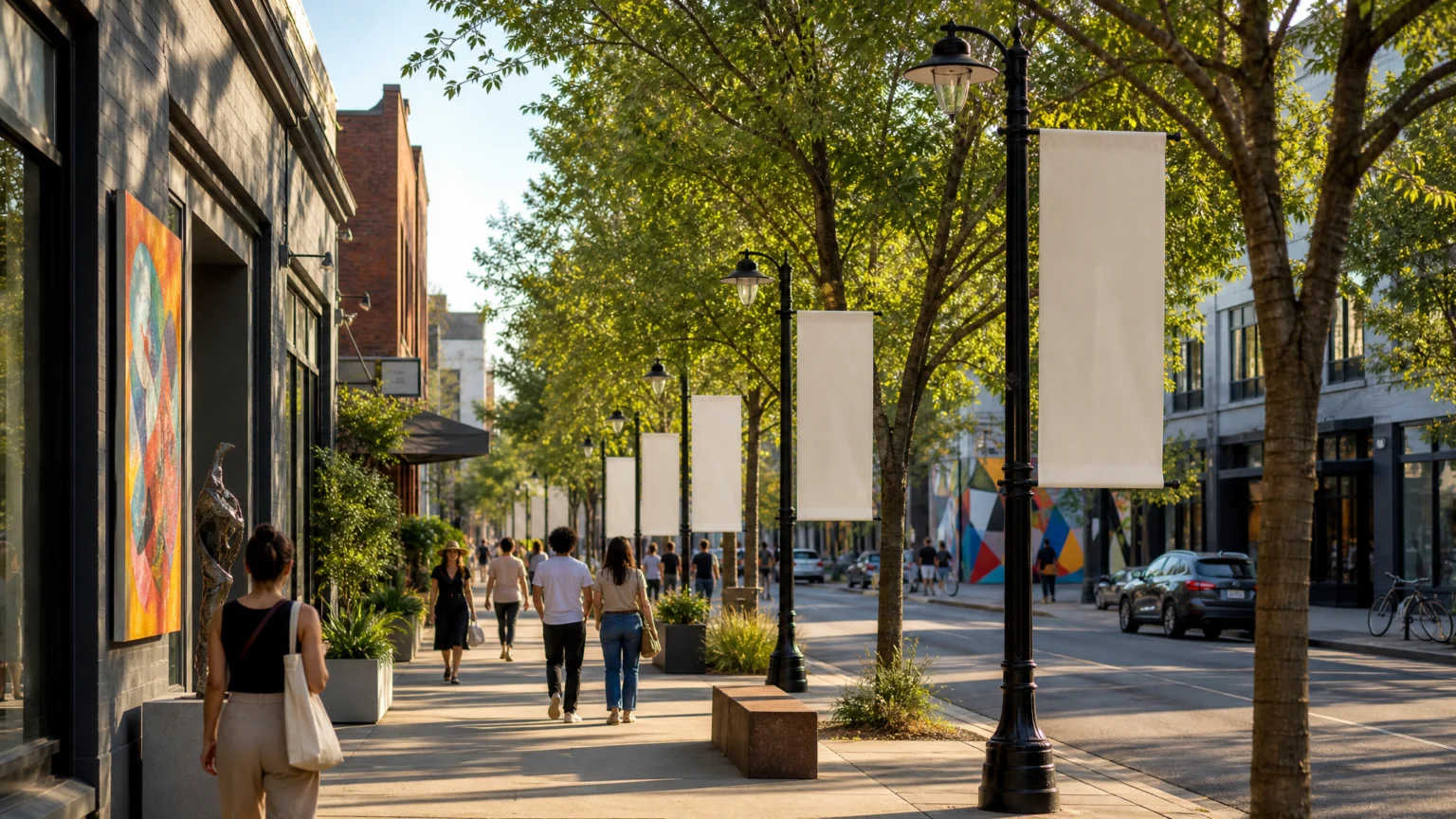
Street banners do a lot with very little. They sit above eye level, repeat from block to block, and tell you where you are before a storefront or event poster gets a chance.
That is why this arts and cultural district banner project stands out. It treats branding as part of the street, not as a graphic dropped onto it. The work has to read at a distance, survive outdoor conditions, and give the neighborhood a recognizable visual signature without sanding down its character.
Why banners matter in district branding
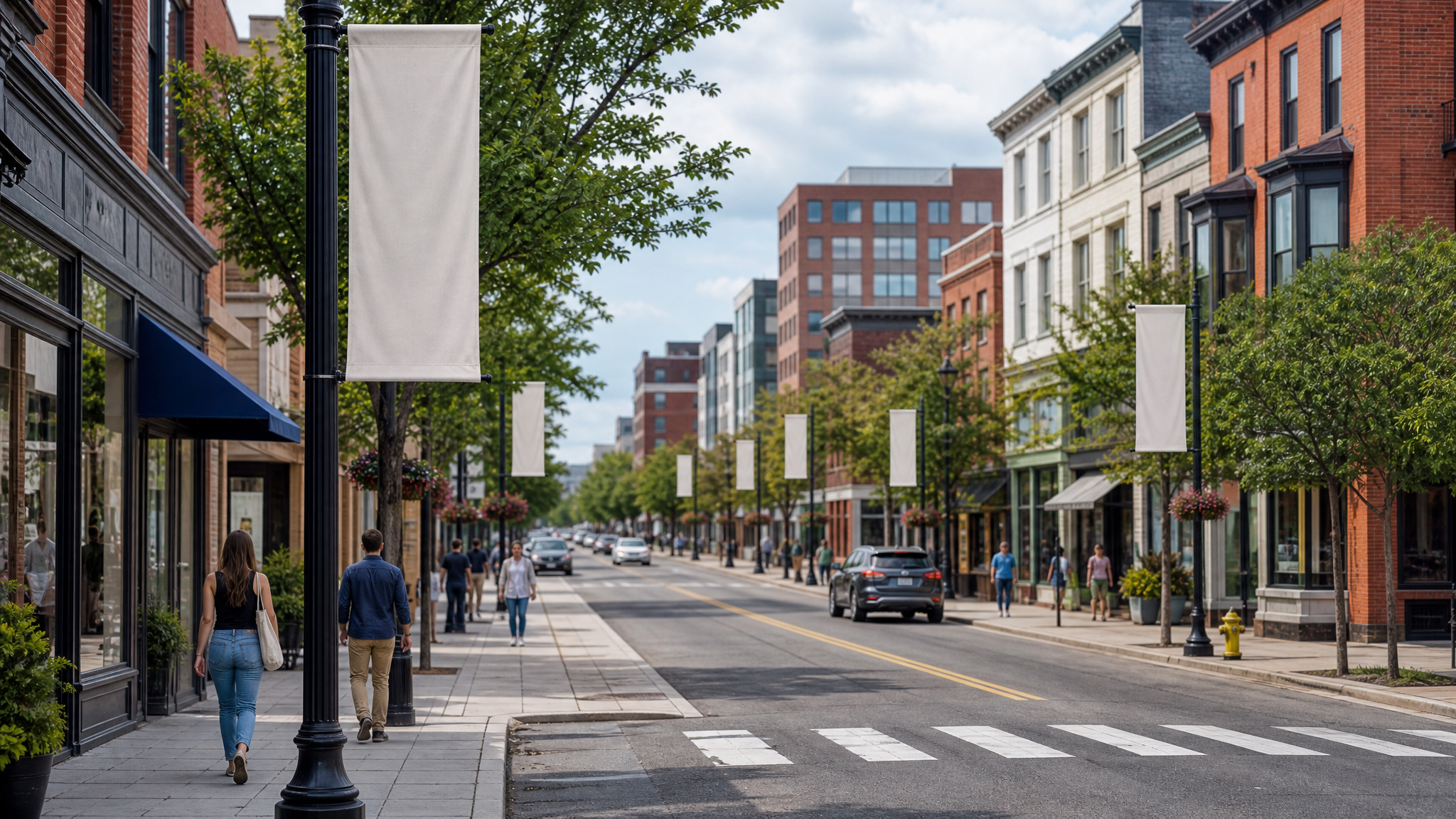
The Old Town North Alliance is developing branding for a new arts and cultural district through a banner design project. Three finalists were selected for the Old Town North Arts and Cultural District Banner Design Project, and the winning artist will work with the alliance on the first phase: designs for 18 to 20 light-pole banners.
That number changes the job. One banner can feel ornamental. Eighteen to twenty start acting like a system, building recognition and direction across a district instead of marking a single address.
This sits close to environmental graphics. A banner needs to stay simple in passing, distinct in memory, and steady when repeated in a row. In public space, the strongest answer is often the one that edits hard.
Why the finalist mix fits the brief
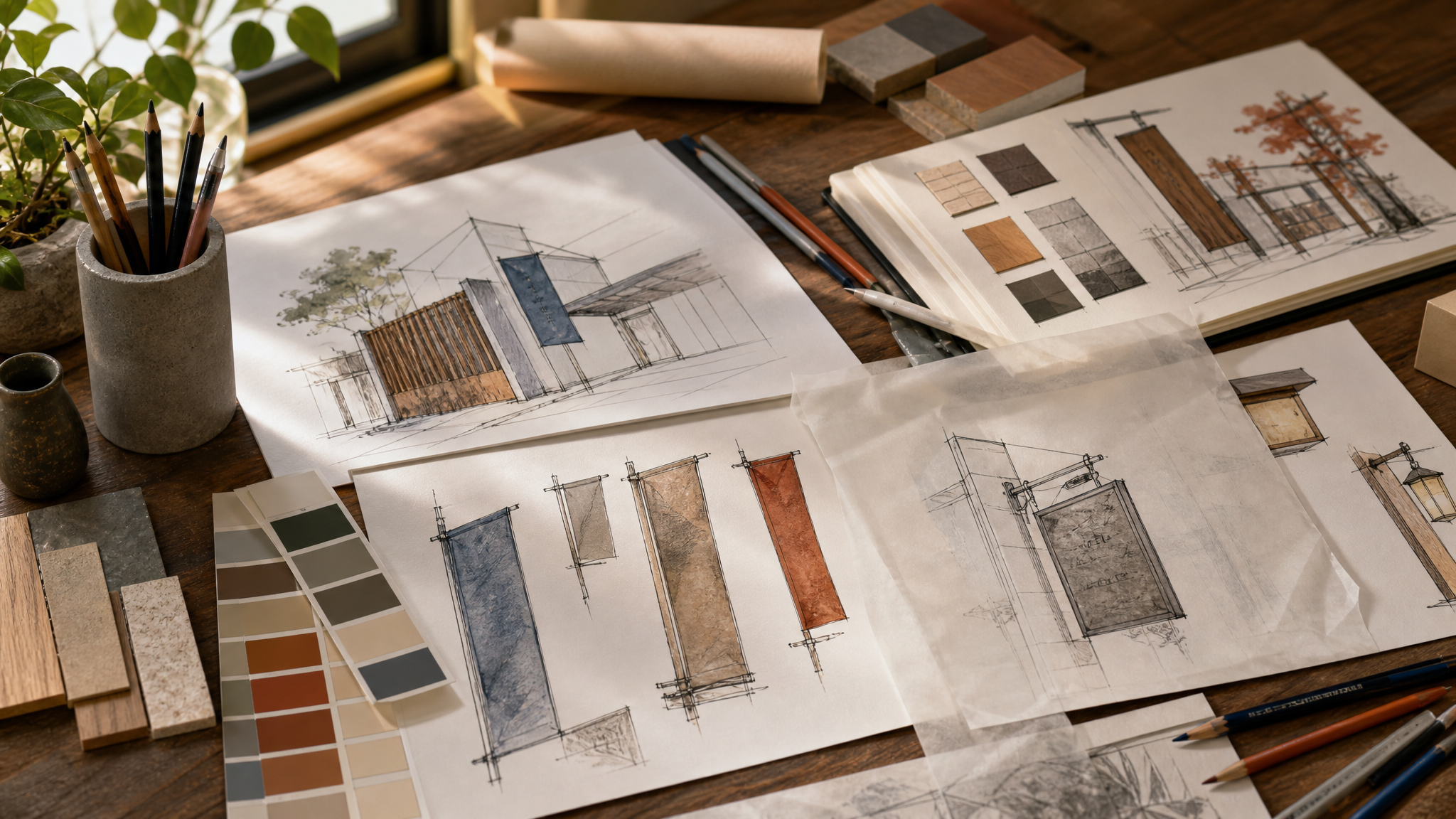
The finalists bring backgrounds that suit the format: Tammy Barnes, a muralist, teaching artist, and custom sign maker; Roxanne Bradley-Tate, an illustrator, graphic designer, and art director; and Lisa Hall, an artist, illustrator, muralist, graphic designer, and marketing specialist.
Those roles point to different kinds of visual judgment. Murals train scale. Signs train legibility. Illustration shapes form, and art direction helps a whole system hold together when it moves from one surface to another.
Bradley-Tate’s experience lines up especially well with banner work. Her background includes architectural illustration, environmental graphics, banner design, signage, and visual identity systems used to create sense of place. That combination matters because district branding has to make many pieces of a neighborhood feel related, not just attractive.
That larger system question is where rollout discipline often matters more than the reveal. A district rarely succeeds on one graphic moment alone. It needs a family of decisions that can hold their timing across poles, signs, print, and whatever comes next.
What public voting adds to the project
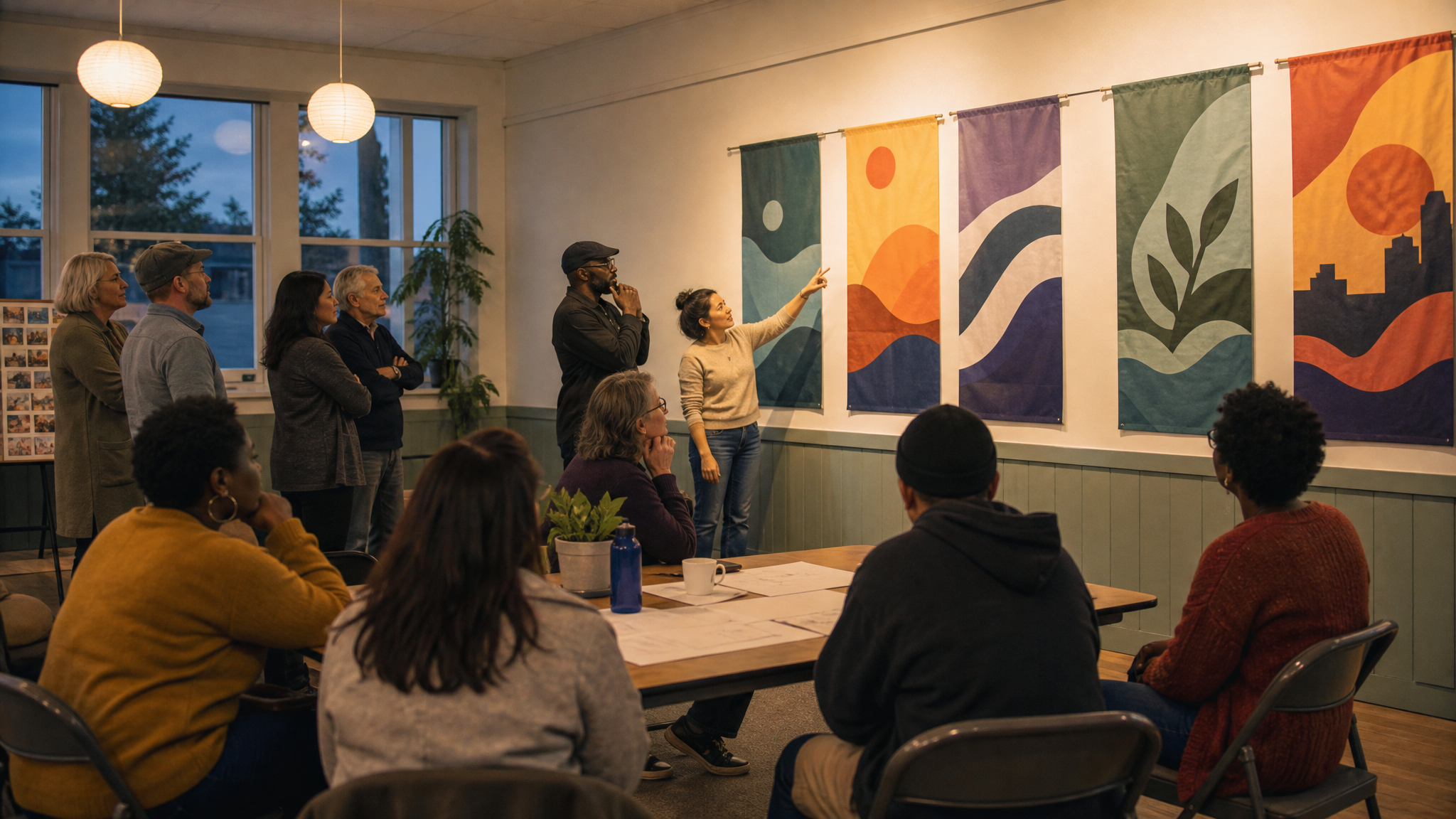
The selection process includes public participation. The finalists will be subject to a public vote to determine the winning artist.
That makes the brief more layered, not less rigorous. A district banner has to satisfy design standards and community recognition at the same time, so the strongest concept is often the one people understand quickly and continue to appreciate on a second look.
Public voting also keeps the project civic before promotional. Residents and visitors will not meet these banners as a campaign. They will meet them as part of the everyday streetscape, which raises the standard for warmth, readability, and fit.
You can see the same principle in other place-based identity work. When the surroundings carry part of the meaning, the result tends to feel more grounded, as in identity projects where place does the talking.
What a pool of more than 50 creatives suggests
Before selecting the three finalists, the alliance received expressions of interest from more than 50 artists and designers. That kind of response says something about the category.
Local branding projects ask for more than style. They ask for judgment about civic pride, artistic character, reproducibility, and the plain reality that the work will live outdoors and repeat across shared public space.
It also makes the finalist shortlist more meaningful. Banner systems are not the same as standalone poster art. They need consistency, restraint, and enough structure to keep the whole set coherent from one pole to the next.
Why funding matters to the final result
The banner project is funded through community sponsorships, a city grant from the Business and the Arts Collaborative Invitational Grant program, and the Old Town North Alliance. That mix ties the work to both civic support and local backing.
Funding from several directions usually brings several expectations with it. The design should feel artistically credible, publicly accountable, and practical to produce. For a district system, that usually favors concepts that are clear, adaptable, and strong enough to stay intact across multiple installations.
There is a broader lesson here for smaller organizations. Modest-scale branding can look substantial when it is repeated consistently in the right physical context. A limited run of well-placed banners can make a neighborhood feel more coordinated than a scattered set of unrelated promotions, much like a modest campaign grows in presence through disciplined visual use.
What designers can take from a project like this
District branding asks for a different mindset than logo-first work. The banner is not a blank container for decoration. It is part of the street surface, and its job is to support recognition at speed, create continuity over distance, and give the neighborhood a clear visual rhythm.
- Design for repetition. A banner should work once and work even better as a set.
- Respect distance. Form, contrast, and hierarchy matter more when the work is seen from sidewalks, cars, and intersections.
- Build a sense of place. District visuals are strongest when they help people feel oriented, not merely impressed.
- Expect extension. Strong banner thinking can inform later signage and identity applications.
- Leave room for community recognition. Public-facing branding works best when people can see themselves in it quickly.
For teams testing early concepts before fabrication, lightweight motion studies can help check whether shapes and contrast stay clear when repeated or viewed in passing. A simple logo reveal animation or a set of animated icons can help inspect hierarchy, pacing, and emphasis before physical rollout.
The best neighborhood banner systems make identity feel native to the street. If this first phase lands well, 18 to 20 poles will do more than carry artwork. They will start teaching the district how to be seen.
 Logo Template
 Logo Template
 Logo Template
 Photo Template