The first visible change is not in the final logo or printed piece. It happens earlier, in the studio tasks most clients never watch: spotting patterns, drafting communication, and generating rough concepts. Across Southwestern Pennsylvania, graphic design and commercial printing firms are bringing AI into those opening steps at the same time.
That matters because these businesses work close to practical limits. Budgets are small, turnarounds are tight, and clients need something usable. In that setting, the real question is not novelty. It is where speed helps, where judgment still has to step in, and who remains responsible for the finished look.
AI is entering the workflow before it enters the final design
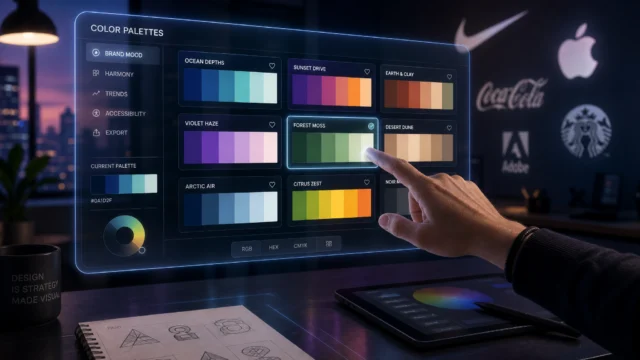
Some of the clearest uses are ordinary ones. AI is being used for analyzing customer project trends, developing client communications, and brainstorming creative direction for different projects. None of that replaces design craft, but it can remove drag from the earliest stages of a job.
For a small firm, that shift changes timing. Less effort spent sorting patterns or drafting routine messages can leave more room for decisions that shape the visual result. That is often where the value already lives: deciding what deserves attention, what should be pared back, and what needs a stronger point of view.
- Use AI where repetition slows the work.
- Keep authorship where taste and responsibility matter most.
- Treat outputs as starting material, not finished identity.
Logo development gets broader at the sketch stage
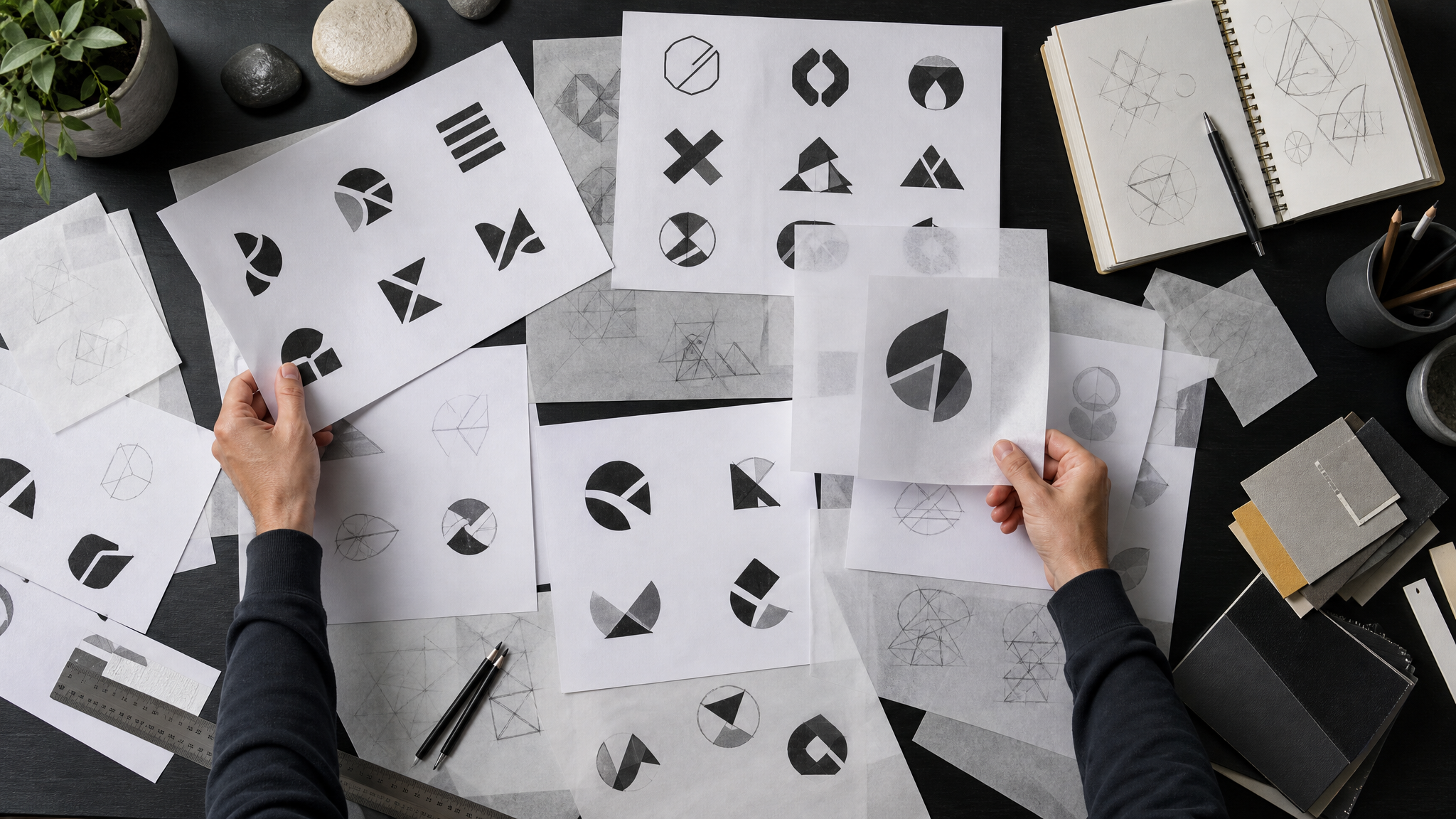
The logo example shows both the appeal and the limit of AI-assisted design. Instead of paying a designer to draft a logo from scratch, a client may be asked to use an AI program to generate a number of potential logo concepts. The designer then refines the best option into a finished product.
That changes the early timing of the process. The first round becomes broader and cheaper, with more directions on the table before the designer commits time to refinement. For some clients, especially smaller businesses, that can lower the barrier to entry.
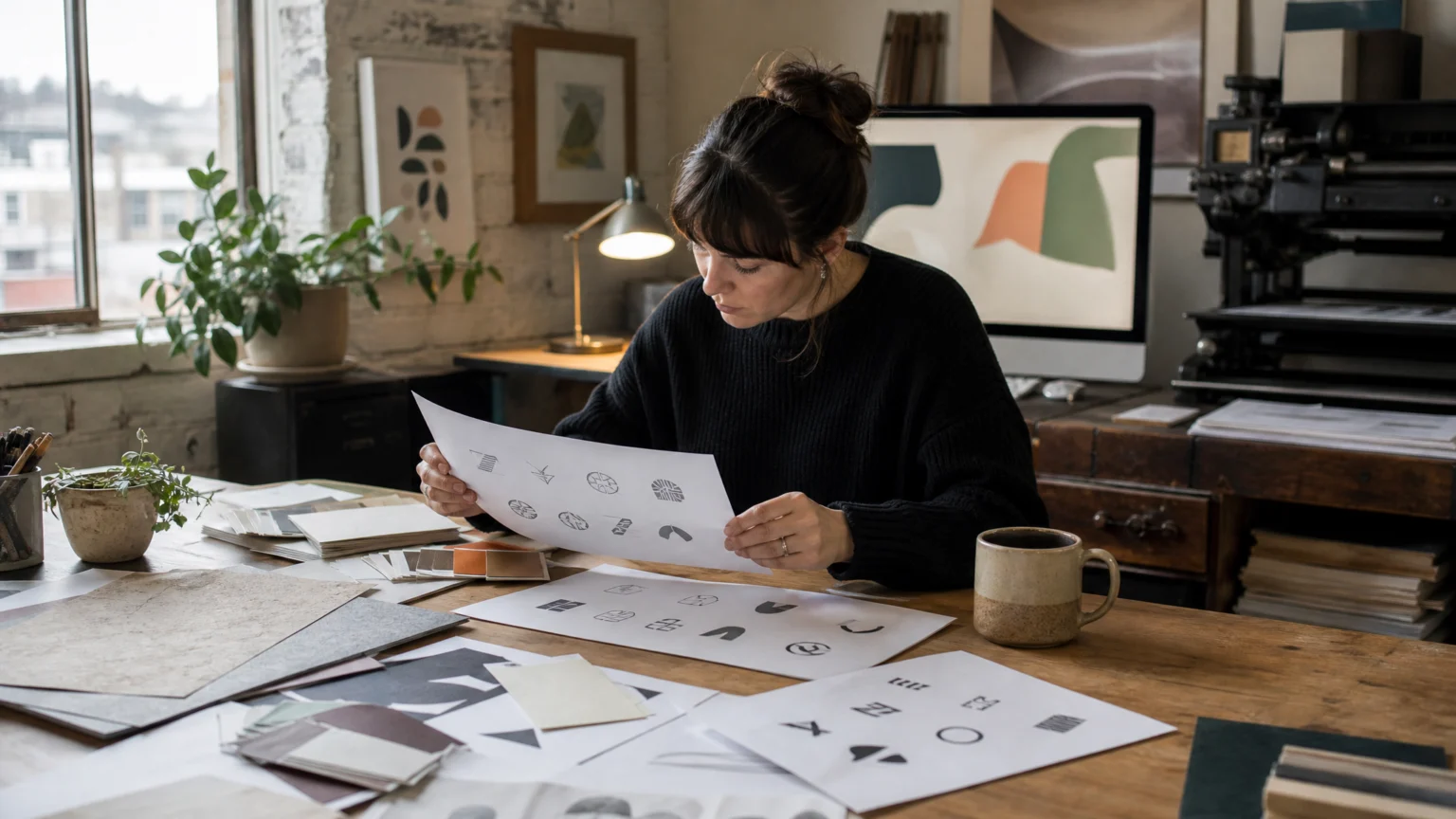
But volume does not solve the hardest part of logo design. A workable mark still needs proportion, restraint, and a clear visual signature. It has to survive reduction, reproduction, and repeated use. AI can produce many options quickly. The designer still has to judge which one has structure, which one only makes a brief impression, and which one can hold up in actual use.
That is where many identity systems flatten out, a problem explored in when three logo options feel like one. More options do not automatically create better distinction. Sometimes they simply create more versions of the same average idea.
Human oversight is still a requirement

Even strong advocates of AI-assisted work are clear about the need to check its output closely. Errors still happen, and imagery involving humans can look strange. That is not a minor warning. It sits near the center of how these tools are actually used.
Designers already know that visual plausibility is not the same as visual correctness. Hands, faces, anatomy, spatial logic, and surface detail can slip quickly in AI-generated imagery. In branding work, those distortions can weaken trust faster than a rough but honest illustration would.
Human review does more than catch mistakes. It restores intention. A designer decides whether an image supports the message, whether the mood feels credible, and whether the style belongs to the brand at all. The machine may accelerate production, but it does not remove the need for taste.
Efficiency and authorship now share the same conversation
The most grounded views in this shift are not arguing for total replacement. They are drawing a line around what clients are actually paying for. Some stay deliberately hands-on so the final product keeps a human touch. Others state it more plainly: clients are paying for expertise as a human and an artist.
That framing helps because it avoids a false contest. The tension is not machine versus designer. It is efficiency versus diluted authorship. If AI handles more of the front end, the back end has to become more intentional. Editing, selection, refinement, and finishing matter more, not less.
For clients, that can clarify the designer’s role. The value is not just in generating options. It is in filtering them, improving them, and understanding how a visual system will perform across print, packaging, signage, and digital use. A quick first draft means little if the final identity feels generic or breaks under practical demands.
Lower-cost access helps only if standards hold

One of the strongest arguments for AI-aided design is affordability. Small, independent businesses can benefit from lower-cost services, especially when traditional graphic design firms feel out of reach. In many local markets, that gap is real.
Low cost helps only when the result is usable. A business that gets an inexpensive logo but ends up with weak differentiation, awkward imagery, or inconsistent files has not really saved money. It has delayed the cost.
That is why access and craft have to move together. AI can make early exploration cheaper. The designer still has to turn rough material into something coherent enough to print, publish, and repeat. Commercial printing firms belong in this story for a reason: design decisions do not end at the screen. They become physical objects, and physical objects expose every compromise.
That access question connects with a familiar small-business design issue covered in how small brands can make a modest campaign look bigger than its budget. Better results often come from careful prioritizing, not from treating every shortcut as equal.
What this means for designers working now
Local creative businesses are already showing that AI is not one single thing. It can act as a research helper, a communications assistant, a concept generator, or a visual risk. Its value depends on where it enters the process and how firmly the designer holds the final direction.
That makes the moment less mysterious than it first seems. Designers who understand form, hierarchy, production limits, and audience cues still hold an advantage. AI may change the pace, but it does not replace the eye that can tell the difference between a plausible draft and a brand asset worth keeping.
For teams building identity systems that need more motion after the mark is settled, a focused tool like Logo Animator can help extend a finished brand into screen use without changing the core design. And when a mark needs a simple, controlled entrance rather than a dramatic effect, logo reveal animation is often the more disciplined choice.
What stands out in Southwestern Pennsylvania is simple. AI is becoming part of local design work because it saves time, expands access, and speeds early exploration. The part that still decides quality is the same as before: the human hand that edits, refines, checks, and finishes.
 Photo Template
 Icon Template
 Icon Template
 Icon Template